Summary
✓Reviewed by James Carter In the world of the PBA, nothing affects a team's playoff run quite like a sudden trade made just weeks before the postseason. A PBA team's reaction to a sudden trade before the playoffs determines whether...
Table of contents
- 1 The Importance of Trade Timing in the PBA Playoffs
- 2 Ginebra’s History as an Aggressive Trader in the PBA
- 3 Case Study 1: The 2022 Jamie Malonzo Trade and Its Playoff Impact
- 3.1 How Ginebra Integrated Malonzo into the System
- 3.2 Lessons from the Malonzo Acquisition
- 4 Case Study 2: The 2024 Blockbuster Trade and the “Win-Now” Message
- 4.1 Results After the Trade
- 5 Three Key Factors in Successful Post-Trade Integration
- 6 The Risks of Late Trades: When a Quick Move Becomes a Problem
- 7 How PBA Trade Rules Work During the Playoffs
- 8 Coach Tim Cone’s Role in Post-Trade Adjustment
- 9 Comparisons: Ginebra vs. Other PBA Teams in Post-Trade Integration
- 10 Frequently Asked Questions About PBA Trades Before the Playoffs
- 10.1 When is the PBA trade deadline before the playoffs?
- 10.2 Can a player be traded after the playoff roster has been submitted?
- 10.3 Why is Ginebra often successful at post-trade integration?
- 10.4 What happens to players not included in their new team’s playoff roster?
- 10.5 How did Ginebra acquire Jamie Malonzo from NorthPort?
- 10.6 What is the most important factor for a late trade to be effective in the playoffs?
- 11 Conclusions and Key Takeaways
- 12 References
In the world of the PBA, nothing affects a team’s playoff run quite like a sudden trade made just weeks before the postseason. A PBA team’s reaction to a sudden trade before the playoffs determines whether that roster move becomes gold or a disaster. No other team in PBA history offers a better case study for this than Barangay Ginebra San Miguel — an organization known for calculated, high-stakes transactions made at the most critical point of the season.
The Importance of Trade Timing in the PBA Playoffs
In the PBA, all trades share one strict limitation: the trade deadline. According to a report by Philstar on June 16, 2025, playoff teams must finalize their 15-man roster before the quarterfinals — and after that point, the lineup cannot be changed for the entire postseason. In the 2025 Philippine Cup, the trade deadline fell on June 2, 2025, while the quarterfinals began on June 16, 2025. This means teams had only a two-week window to integrate their new players into the team’s playoff system.
According to the PBA, the trade deadline is not set on a fixed calendar date — it is conference-based and typically tied to the end of the elimination round of a particular conference. As a result, teams making late-season trades have an even shorter adjustment window than leagues in other countries.
Ginebra’s History as an Aggressive Trader in the PBA
Barangay Ginebra San Miguel has long held a reputation as one of the most active teams when it comes to roster moves in the PBA. According to Wikipedia, the franchise — originally called “La Tondeña Distillers” and renamed “Ginebra San Miguel” in the 1980s — has become one of the most storied organizations in PBA history. Over many decades, they have consistently used trades as a primary instrument to maintain competitiveness, especially during critical phases of the season.
This historic pattern of aggressive trading continues to the present day. From the one-on-one trade that brought Christian Standhardinger to Ginebra in 2021 — detailed by ESPN Philippines — to multi-player blockbusters, the franchise has shown it is willing to spend roster assets when it sees an opening to win a championship.
Case Study 1: The 2022 Jamie Malonzo Trade and Its Playoff Impact
One of the most significant examples of a PBA team’s reaction to a sudden trade before the playoffs is Ginebra’s acquisition of Jamie Malonzo from the NorthPort Batang Pier in 2022. According to ESPN, the trade was described as a major win for Ginebra because they acquired an elite multi-positional defender packed with athleticism — a crucial asset for playoff basketball.
The assets going to NorthPort were Arvin Tolentino, Prince Caperal, and a first-round pick from the 2022 draft. The deal was further complicated — it also included Von Pessumal moving to NorthPort from San Miguel in exchange for two second-round picks, after which Pessumal was sent to Ginebra in exchange for Jeff Chan and Kent Salado.
How Ginebra Integrated Malonzo into the System
Based on data gathered from Wikipedia, in his first full season with Ginebra, Malonzo averaged 15.1 points, 7.5 rebounds, 2.4 assists, 1.4 steals, and a .359 three-point percentage across 56 games — demonstrating the effectiveness of the integration. Coach Tim Cone used him as a switchable wing-forward: a player capable of guarding multiple positions, running in transition, rebounding, and finishing in open space.
Lessons from the Malonzo Acquisition
Three important lessons can be drawn from the Malonzo trade case:
- Assigning a clear defensive role accelerates a new player’s adaptation
- The presence of veteran leaders like LA Tenorio and Scottie Thompson helps newcomers understand the playbook more quickly
- Malonzo’s athletic profile was a perfect fit for Cone’s system, showing that fit analysis matters more than raw statistics
Case Study 2: The 2024 Blockbuster Trade and the “Win-Now” Message
The most dramatic example of a PBA team’s reaction to a sudden trade before the playoffs is the blockbuster deal between Ginebra and the Terrafirma Dyip in July 2024. According to a detailed report by ESPN, Ginebra sent Christian Standhardinger, Stanley Pringle, and the No. 10 overall pick to Terrafirma, while receiving Isaac Go, Stephen Holt, and the No. 3 overall pick in return.
This deal was made just days before the 2024 PBA Draft — an extremely close timing to the start of a new conference. For many analysts, this was a clear “win-now” signal from Ginebra management: sacrificing a long-term draft asset (Standhardinger) to bolster the roster for the playoffs.
Results After the Trade
Based on a report from GMA Network, Ginebra finished the 2024 Philippine Cup elimination round at 8-3 — including a game against their former teammate Standhardinger’s Terrafirma squad, which Ginebra won 102-80. Particularly notable in that game: 21 points, 7 rebounds, 3 assists, and 2 blocks from Japeth Aguilar, and 17 points and 11 rebounds from Aljon Mariano — numbers showing the trade did not disrupt the team’s core production.
“Ginebra’s success after every major trade is not an accident — it is the result of a clear integration system and the strength of veteran leadership inside the locker room.”
Three Key Factors in Successful Post-Trade Integration
Based on Ginebra’s two case studies, three key factors clearly determine whether a late trade will be effective during the playoffs.
- System fit: The new player must match the team’s tactical identity — you cannot hire an ISO scorer for a system built on ball movement
- Veteran leadership: Veteran leaders serve as the “bridge” between the new player and the team’s system
- Role clarity: When a new player’s role is clear from day one, adaptation is faster and the likelihood of in-game confusion is lower
When examining earlier Balita Sports articles such as the case study of PBA rookies who quickly moved into the rotation, the same pattern emerges: players with clearly defined roles and solid veteran mentorship align more quickly with the team’s needs.
The Risks of Late Trades: When a Quick Move Becomes a Problem
Not every late trade succeeds. There are situations where a sudden roster change creates more problems than solutions — particularly when integration time is insufficient, when the new player has an injury history, or when his playing style contradicts the existing system.
According to PBA policy cited in the Philstar report, even if a player is injured, he cannot be activated for the playoffs if he is not listed on the submitted playoff roster. This means that no matter how promising a trade acquisition may be, if he cannot play due to injury before the roster submission deadline, all the roster assets spent to acquire him are wasted.
How PBA Trade Rules Work During the Playoffs
For newer fans who want to understand the process, here is a simple breakdown of PBA trade mechanics before the playoffs. Based on the PBA’s official transactions page, all roster moves are recorded and published by the league for transparency. The process works as follows:
- Teams may trade throughout the entire elimination round of a conference
- Once the trade deadline is reached (typically the end of the elimination round), direct exchanges are no longer permitted
- After the trade deadline, teams may still sign unrestricted free agents
- Teams must submit their 15-man playoff roster to the PBA office before the quarterfinals
- The playoff roster cannot be changed once it has been submitted
For a deeper understanding of how the PBA trade deadline works, you can also check Balita Sports’ previously published analysis on common misconceptions about PBA trade rumors.
| Trade | Year | Player Acquired by Ginebra | Assets Sent | Playoff Result |
|---|---|---|---|---|
| Ginebra-NorthPort | 2022 | Jamie Malonzo | Arvin Tolentino, Prince Caperal, 1st-round pick | Stronger defense and versatility in the playoffs |
| Ginebra-NorthPort (Standhardinger) | 2021 | Christian Standhardinger | Greg Slaughter | Added frontcourt scoring and rebounding |
| Ginebra-Terrafirma | 2024 | Isaac Go, Stephen Holt, No. 3 pick | Standhardinger, Stanley Pringle, No. 10 pick | 8-3 in elimination round; Top seed achieved |
Coach Tim Cone’s Role in Post-Trade Adjustment
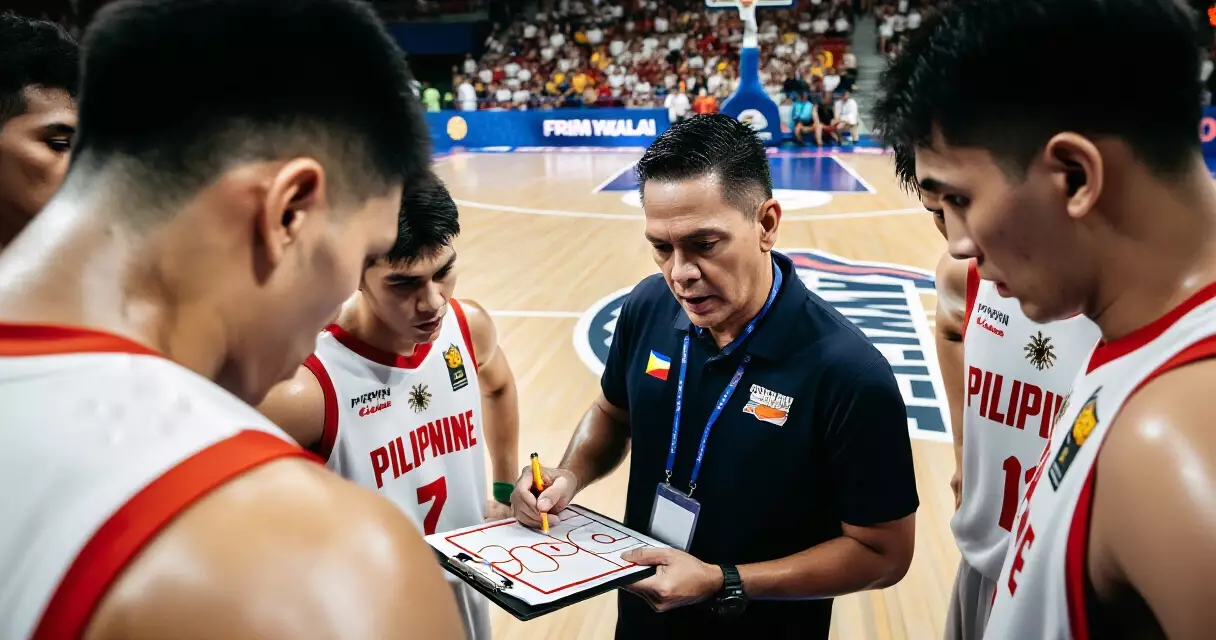
Ginebra’s success in post-trade scenarios cannot be discussed without mentioning the role of Head Coach Tim Cone. His coaching philosophy — centered on defensive discipline, ball movement, and veteran accountability — is a major reason why new players adjust to the Ginebra system faster than at other teams.
With each sudden trade, Cone applies what he calls a “plug-in-and-keep-winning” approach: simplifying the new player’s responsibilities and waiting for chemistry to develop organically, while relying on veterans Scottie Thompson, Japeth Aguilar, and LA Tenorio to serve as guides inside the locker room.
“At Ginebra, a new player doesn’t have to learn a new brand of basketball — they just have to learn their role within a clear and long-established system.”
Comparisons: Ginebra vs. Other PBA Teams in Post-Trade Integration
| Aspect | Barangay Ginebra | Typical PBA Team |
|---|---|---|
| Coaching approach after a trade | Simplified roles, veteran-led integration | Often adjusts the offense to fit the new player |
| Veteran leadership | Strong (Thompson, Aguilar, Tenorio) | Depends on roster composition |
| Track record of post-trade playoff performance | Positive (8-3 in 2024, successful Malonzo integration) | Mixed — depends on timing and player fit |
| Roster asset management | Willing to spend picks and veterans for win-now moves | More conservative with long-term assets |
Ginebra’s strategy also stands out when compared across other dimensions of the PBA. For example, changes to PBA import rules in 2026 added a new layer to how teams build their rosters for the playoffs.
Frequently Asked Questions About PBA Trades Before the Playoffs
When is the PBA trade deadline before the playoffs?
The PBA trade deadline is not set on a fixed annual date. It is conference-based and typically takes effect at the end of the elimination round of each conference. For example, in the 2025 Philippine Cup, the trade deadline fell on June 2, 2025, while the quarterfinals began on June 16, 2025.
Can a player be traded after the playoff roster has been submitted?
No. According to PBA policy, once a team submits its 15-man playoff roster before the quarterfinals, it cannot be changed for the entire postseason. Even if a player is injured, he cannot be replaced by someone not included in the submitted playoff roster.
Why is Ginebra often successful at post-trade integration?
Three main reasons can be identified: First, Coach Tim Cone’s clear and simple system is easy for new players to learn. Second, the presence of strong veteran leadership (Thompson, Aguilar, Tenorio) helps newcomers get up to speed. Third, Ginebra tends to select players who fit their system rather than star players who don’t suit their style.
What happens to players not included in their new team’s playoff roster?
When a player is traded before the playoffs and is not included in his new team’s playoff roster, he is not eligible to play in the postseason. He may still participate in practices and team activities, but he has no eligibility to play in the playoffs until the following conference.
How did Ginebra acquire Jamie Malonzo from NorthPort?
Based on information published by ESPN, the trade sent Arvin Tolentino, Prince Caperal, and a first-round pick from the 2022 draft to NorthPort in exchange for Malonzo. The broader deal also included Von Pessumal moving to NorthPort from San Miguel, and subsequently Pessumal moving to Ginebra in exchange for Jeff Chan and Kent Salado.
What is the most important factor for a late trade to be effective in the playoffs?
Based on Ginebra’s case studies, the most important factors are: (1) the new player’s system fit with the team’s existing style, (2) sufficient time to practice and learn the playbook before the playoffs, and (3) the new player’s health. No matter how talented a player is, if he does not fit the system or is injured, he will not be effective in the short window of playoff integration.
Conclusions and Key Takeaways
A PBA team’s reaction to a sudden trade before the playoffs is a complex topic with many variables. But through the case study of Barangay Ginebra San Miguel, a clear blueprint emerges for how to do it right. The key is not the size of the deal or the quality of the players acquired — it is the quality of the integration process.
- Ginebra has a clear system that makes adaptation easier for new players
- The veteran leadership of Thompson, Aguilar, and Tenorio is an invisible asset that accelerates chemistry building
- Timing is crucial: the earlier the trade, the more adequate the integration window
- System fit matters more than star power when discussing late-season trades
- A thorough understanding of PBA trade deadline rules is essential for every team manager to avoid mistimed moves
For fans who want to better understand the broader landscape of PBA roster decisions and playoff dynamics, the top players in the 2026 PBA Commissioner’s Cup provide excellent context for who is currently building their legacy in the league.
References
- Philstar: Playoff teams finalize rosters today — retrieved August 29, 2026