Summary
For every Filipino sports fan wondering why their favorite player isn't playing in a big game, the answer is often hidden within an injury report. The how to make an injury update in basketball: guide to reading medical report, return-to-play...
Table of contents
- 1 Why Injury Updates in Basketball Are Important
- 2 The History of Injury Reporting in Professional Basketball
- 3 Status Labels Every Fan Should Know
- 4 How to Read Medical Terminology in Injury Reports
- 4.1 Common Medical Terms in Basketball Injury Reports
- 4.2 Injury Grade and Its Relation to Return Timeline
- 5 The Return-to-Play Protocol: From the Bench Back to the Court
- 5.1 Steps in the Return-to-Play Protocol
- 6 How to Make an Injury Update for PBA, UAAP, and NBA
- 7 Real Example: Injury Updates in PBA and Gilas Pilipinas
- 8 Common Mistakes to Avoid When Writing Injury Updates
- 9 Frequently Asked Questions about Injury Updates in Basketball
- 9.1 What is the difference between a sprain and a strain?
- 9.2 What does “day-to-day” mean in an injury report?
- 9.3 How long is the recovery after an MCL sprain in basketball?
- 9.4 Where can the official NBA injury report be found?
- 9.5 How does injury reporting in the PBA differ from the NBA?
- 9.6 Should injury updates be combined with game previews?
- 10 Summary: The Key to Correct Injury Updates
For every Filipino sports fan wondering why their favorite player isn’t playing in a big game, the answer is often hidden within an injury report. The how to make an injury update in basketball: guide to reading medical report, return-to-play is one of the most important skills anyone covering the PBA, UAAP, or NBA should learn — because correctly reading such updates provides a true picture of the team’s health before the game. According to the NBA Injury Report for the 2025-26 Season, each team is required to report the injury, illness, or any medical condition of a player before each game — and the system is continuously updated throughout the game day.
Why Injury Updates in Basketball Are Important
Not only journalists and coaches need to read injury updates correctly — every fan following their favorite team does too. The injury report serves as the official communication of the team and league to the public about an athlete’s condition. In the context of the PBA, for example, a player listed as “intends to play” in a report is very different from one who has announced as “out for the game.” Correct interpretation of such wording is critical for fans, media, and even sports journalists writing game previews.
Moreover, the injury update also provides context to the team’s statistics and performance. When a fan learns that a starting point guard is “day-to-day” due to an ankle sprain, their expectations for the next game become clearer. This is why how to make an injury update in basketball and how to read it are both important lessons for any serious sports follower today.
The History of Injury Reporting in Professional Basketball
The formal system of injury reporting in basketball wasn’t always this systematic. In the early decades of the NBA, information about player health was often released by the team without a standard — sometimes just before the game, sometimes in a statement after practice. Over the past two decades, the NBA has established stricter protocols, leading to the current NBA Injury Report for the 2025-26 Season, which sets fixed deadlines and continuous updates. In the Philippines, the PBA and UAAP also have their own processes, although public reporting often focuses more on when the player can return rather than the details of the diagnosis.
Status Labels Every Fan Should Know
The most critical part of an injury update is the status label — the word that provides a general picture of a player’s availability for the next game. Here are the most common labels and their meanings:
- Out — The player is confirmed not to play in the upcoming game. The clearest and most serious label.
- Day-to-Day — The player is in the recovery process. The final decision will be made close to the game. May or may not play.
- Questionable (used in the NBA) — There is a 50-50 chance of playing. Usually means the team sees a possibility of returning.
- Probable — Likely to return, but not yet fully confirmed.
- Intends to Play (commonly used in the PBA) — A personal statement from the player that they want to play, but it is not a clearance from the medical staff.
According to data from ESPN Philippines NBA Injury Status for the 2026-27 Season, these labels are used alongside a brief note explaining the player’s latest condition — for example, “knee — ruled out for Saturday’s game” or “ankle — will return to the team on a one-year deal.” This combination of label and note provides the clearest picture to fans and the media.
How to Read Medical Terminology in Injury Reports
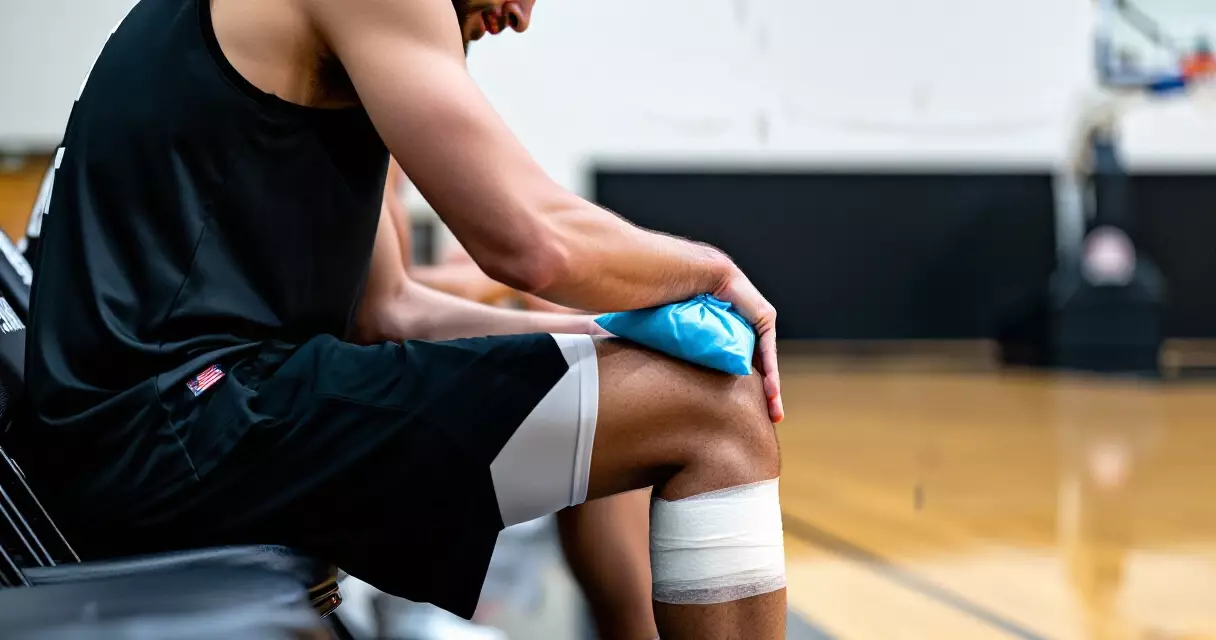
One of the most challenging parts of reading an injury update is understanding medical terminology. When the report mentions “MCL sprain,” for example, many fans do not immediately understand its seriousness. According to Chris Newsome‘s statement during the PBA Philippine Cup semifinals, his official update stated he had an “MCL sprain on his left knee” and was in the recovery process — a concrete example of how such medical information is released in public statements.
Common Medical Terms in Basketball Injury Reports
| Terminology | Meaning | Common Recovery Time |
|---|---|---|
| Sprain | Injury to a ligament (the tissue connecting bone to bone) | 1–8 weeks, depending on the grade |
| Strain | Injury to a muscle or tendon (the tissue connecting muscle to bone) | 1–6 weeks |
| MCL Sprain | Injury to the Medial Collateral Ligament of the knee | 3–8 weeks for Grade 2–3 |
| Achilles Injury / Tendinopathy | Injury or inflammation of the Achilles tendon at the back of the ankle | From several weeks to months |
| Arthroscopic Procedure | Minimally invasive surgery using a small camera; usually has a shorter recovery | 4–12 weeks |
| Return to Full Basketball Activities | Official statement that the player has reached full training and playing capacity | Final step before returning to play |
It’s also important to know that the difference between “sprain” and “strain” is often confused by fans: a sprain refers to a ligament, while a strain refers to a muscle or tendon. They are not the same injury, and their treatment and recovery timelines differ.
Injury Grade and Its Relation to Return Timeline
Not all sprains or strains are equal in severity. Ligament and muscle injuries are usually classified into three grades:
- Grade 1 — Mild injury; slight stretching or reaching of the tissue. Quick recovery, usually 1–2 weeks.
- Grade 2 — Partial tearing of the tissue. Longer recovery, from several weeks to two months.
- Grade 3 — Complete tearing of the tissue. Surgery may be required; recovery can take three to six months.
Unfortunately, public injury reports — especially in the PBA and UAAP — often do not specify the grade. Readers need to seek additional information from team press conferences or accredited reporters with direct access to the medical staff. For a deeper understanding of how rosters change based on such information, updates can also be found in the guide to the PBA Draft explaining the process of bringing new players into the team.
The Return-to-Play Protocol: From the Bench Back to the Court
The return-to-play protocol is the systematic process of returning an athlete to full play after an injury. It is not a sudden return — it is a step-by-step series of actions ensuring the player’s body is ready for the full intensity of the game. According to documentation from ESPN Philippines regarding the PBA restart protocol, the return-to-play process first underwent two to three weeks of conditioning before reaching hard practices and full games.
In the same PBA restart, teams began with a restricted setup: only six people were allowed per group — four players, one medical officer, and one trainer. This was the smallest group level allowed in soft practices and served as the first step in the careful process of returning to full-contact basketball.
The return-to-play is not a one-day decision — it is a weeks-long process assessed by the medical staff before allowing the player to return to full game intensity.
Steps in the Return-to-Play Protocol
- Rest and Initial Recovery — Pain and swelling removal; no basketball activity.
- Conditioning and Cardio — Restoring aerobic fitness without contact; e.g., stationary bike or light jogging.
- Non-Contact Drills — Shooting drills and movement drills without contact with other players.
- Limited Contact Practice — Adding controlled contact; scrimmage with a limited group.
- Full Practice — Full team, full intensity, equivalent to regular practice setup.
- Medical Clearance and Game Return — Official permission from the team doctor before allowing the player to play in an official game.
How to Make an Injury Update for PBA, UAAP, and NBA
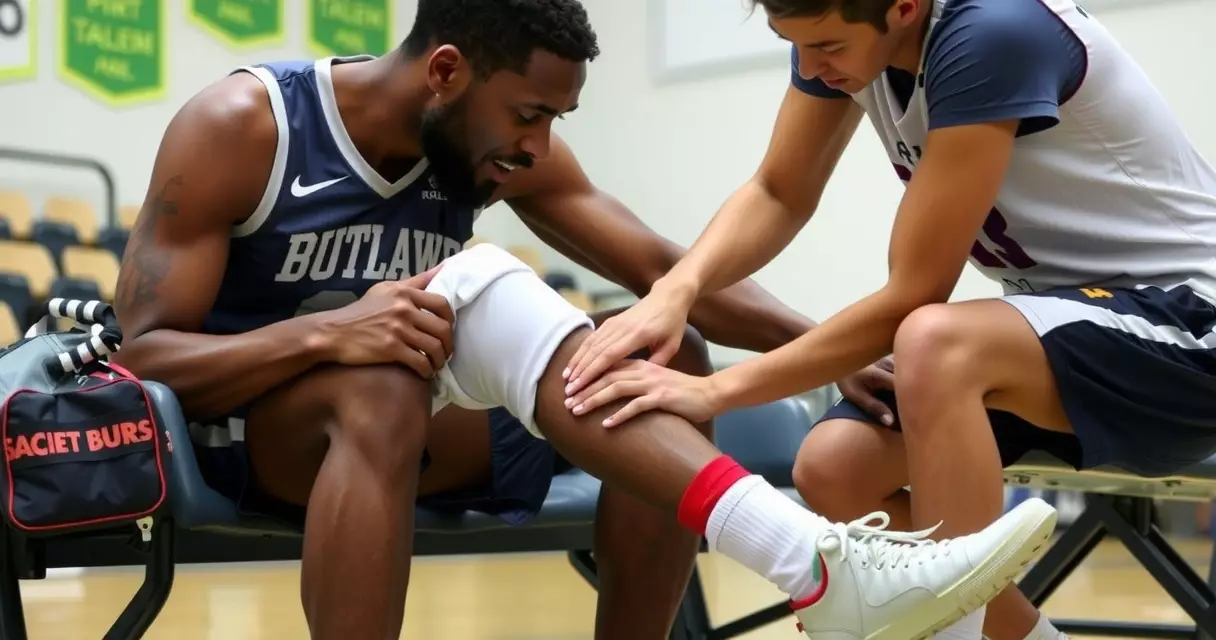
For sports journalists and fan bloggers, writing an injury update requires strict standards: accurate, reliable, and clear. Here are the main steps for how to make an injury update in basketball with correct content and ethical methods:
- Identify the official source. In the NBA, the most reliable source is the official NBA injury report. In the PBA and UAAP, the most reliable source is the official statement from the team or league, confirmed by an accredited reporter.
- Clearly state the status label. Start the update with the status (out, day-to-day, intends to play) — this is the most important for the reader.
- Include the diagnosis if available. If there is an official medical term (e.g., MCL sprain, ankle swelling), include it accurately — do not paraphrase in a way that changes the meaning.
- Add the return timeline if stated. If the medical staff or coach has spoken about the expected return time, include it with attribution.
- Separate fact from speculation. If the diagnosis or timeline is not yet confirmed, state it clearly — do not draw conclusions without basis.
Real Example: Injury Updates in PBA and Gilas Pilipinas
Concrete examples are the most effective way to learn. Here are some real injury updates from Philippine basketball showing the correct format and wording:
| Player | Injury | Status | Source of Information |
|---|---|---|---|
| Chris Newsome (Meralco) | MCL sprain, left knee | In recovery process; still affecting availability | Player’s own statement in press conference (PBA Philippine Cup semis) |
| Chris Ross (San Miguel) | Right Achilles injury + left ankle injury (Game 3 of PBA Philippine Cup Finals) | “Intends to play” in Game 4 according to player | ESPN Philippines / PBA Finals coverage, January 2026 |
| Justin Brownlee (Gilas Pilipinas) | Multiple injuries | Out vs. Australia in 2027 FIBA World Cup Asian Qualifiers | Official statement from Samahang Basketbol ng Pilipinas (SBP), July 2026 |
In the example of Justin Brownlee, the update released by the Samahang Basketbol ng Pilipinas is clear and direct: “out” is the status, the game is specified (vs. Australia), and the league officially confirmed it. This is the model of a good injury update — no speculation, clear source, and specific scope of information. For a broader context of the Gilas roster and injuries, additional details can be found in the analysis of the Gilas Pilipinas roster for the 2026 FIBA Qualifiers.
Common Mistakes to Avoid When Writing Injury Updates
Many common mistakes are made by beginners in writing basketball injury updates. Some of the most common are:
- Confusing “intends to play” with “cleared to play” — The former is a player’s statement; the latter is an official clearance from the medical staff. They are different and should not be interchanged.
- Using incorrect medical terminology — Saying “pulled muscle” instead of “strain” or “torn ligament” instead of “ligament rupture” gives a wrong image of the injury.
- Not specifying the source — Every injury update should have clear attribution: who said it, when, and where.
- Using outdated information — Injury status can change quickly. Always ensure the source of information is the most recent.
- Exaggerating severity or recovery time — Do not say “months of recovery” if the official statement is “week-to-week” as stated by the team.
A wrong injury update not only sets false expectations for fans — it can also harm the player’s reputation and the integrity of sports media.
Frequently Asked Questions about Injury Updates in Basketball
What is the difference between a sprain and a strain?
A sprain is an injury to a ligament — the tissue connecting bone to bone. A strain, on the other hand, is an injury to a muscle or tendon — the tissue connecting muscle to bone. In basketball, ankle sprains and MCL sprains are more common, while hamstring strains are more common among players who run fast. The two have different treatments and recovery times.
What does “day-to-day” mean in an injury report?
“Day-to-day” indicates that the player is in the recovery process but their availability for the next game is not yet confirmed. The medical staff assesses the player’s condition daily, so the decision is made close to the game. It is not a guarantee that the player will or will not play — the final update must still be awaited.
How long is the recovery after an MCL sprain in basketball?
The recovery time for an MCL sprain depends on the grade of the injury. For Grade 1, it is usually one to three weeks. For Grade 2, it can be three to six weeks. For Grade 3 or complete tearing of the MCL, surgery may be required, and recovery can take three to six months. In the case of Chris Newsome of Meralco in the PBA Philippine Cup, the update he shared showed that the official wording was “MCL sprain” only — no grade was mentioned, which is a common pattern in public PBA injury announcements.
Where can the official NBA injury report be found?
The official NBA injury report can be found on the league’s official website. Updates are released according to the scheduled time — before 5:00 PM on the day before the game, and before 1:00 PM for the second game of a back-to-back. The report is continuously updated throughout the game day, so it is important to check the latest version before writing any update.
How does injury reporting in the PBA differ from the NBA?
In the NBA, injury reporting is formal, scheduled, and mandatory for all teams. In the PBA, public injury updates more often come from team announcements, coach press conferences, and the player’s own statements — there is not yet a formal standardized system like the NBA. Because of this, PBA injury updates often rely more on the media’s relationship with team sources.
Should injury updates be combined with game previews?
Yes, but it should be done carefully. The injury update should be placed as a specific section of the game preview — clearly attributed and up-to-date information. Do not use the injury update as the foundation of the entire preview if the player’s availability is not yet confirmed. In writing sports news, understanding the arrangement of elements is one of the key skills, as explained in the guide to writing sports news articles.
Summary: The Key to Correct Injury Updates
How to make an injury update in basketball is a skill that combines med