Summary
If you're wondering how to fit into the PBA practice routine as an ordinary person, you're not alone. Thousands of basketball fans and hobbyists ask if they can keep up with the rhythm of professional players in the Philippine Basketball...
Table of contents
- 1 The Real Structure of PBA Practice: It’s Not What You Think
- 2 History of PBA Training Culture: How Training Has Changed
- 3 How to Fit into the PBA Practice Routine: The Three Parts of the Day
- 3.1 Before the Session: Conditioning and Warm-Up
- 3.2 During the Session: Team Plays and Defense
- 3.3 After the Session: Individual Skill Work
- 4 The Right Ball-Handling Routine from the PBA Approach
- 5 How to Fit into the PBA Practice Routine: The Conditioning Part
- 6 The Shooting Routine to Do Before and After the Game
- 7 Mental and Tactical Part: Watching Film Like a PBA Pro
- 8 How an Ordinary Person Can Lead to the PBA D-League
- 9 Frequently Asked Questions (FAQ)
- 9.1 Can an ordinary person keep up with PBA players in practice?
- 9.2 How long should the daily practice of an ordinary player be?
- 9.3 Do you need a gym membership to follow a PBA-inspired practice routine?
- 9.4 What is the most important skill an ordinary player should focus on?
- 9.5 How do I know if my training is improving?
- 9.6 What is the difference between a PBA practice routine and an ordinary barangay practice?
- 10 References
If you’re wondering how to fit into the PBA practice routine as an ordinary person, you’re not alone. Thousands of basketball fans and hobbyists ask if they can keep up with the rhythm of professional players in the Philippine Basketball Association. The truth: a typical PBA team practice lasts only one and a half hours (90 minutes), according to statements from active players. The real work happens before and after the team session, and this is exactly where an ordinary person can insert their own training.
The Real Structure of PBA Practice: It’s Not What You Think
Many people think that PBA players train for four or five hours a day. According to interviews with active players, the reality is different. The team practice focuses only on plays, rotations, and team defense. Things like free throw shooting, dribbling drills, and individual conditioning are expected to be done by each player on their own time, before the team practice starts or after it ends.
This principle opens the door for the ordinary person. If professionals themselves work on their individual skills separately from the team, it means the training structure is not exclusive to those with facilities or coaching staff. It can be replicated outside the gym.
History of PBA Training Culture: How Training Has Changed
When the PBA was established in 1975 as the first professional basketball league in Asia, practices were not as systematic as they are today. In the early decades, team sessions were longer and the boundaries between individual versus team work were less clear. Over the years, especially from the 2000s to the present, coaches have become more strategic in managing time — shortening team practice to be focused and high quality, while expecting players to do their individual drills separately. The PBA’s ban on direct hiring since 2001, according to the Philippine Star, also strengthened the preparation system even before reaching the draft.
How to Fit into the PBA Practice Routine: The Three Parts of the Day
To understand how to fit into the PBA practice routine as an ordinary person, you need to divide the day into three parts: preparation before the team session, the team session itself, and individual work afterward. For a regular person with a job or school, this can be translated into their own schedule.
Before the Session: Conditioning and Warm-Up
According to PBA player interviews, conditioning is not done within the team practice. It is completed before the session. For an ordinary person, this means 20 to 30 minutes of cardiovascular work (jogging, jump rope, or agility ladders) should be done before stepping onto the court with the group. This can be done early in the morning or an hour before the scheduled game or community practice.
During the Session: Team Plays and Defense
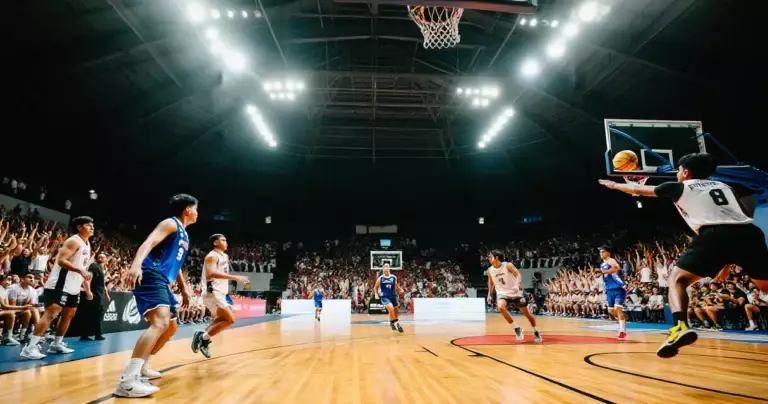
The 90-minute team session is for plays, defensive rotations, and team chemistry. For an ordinary player participating in a barangay league or community team, the equivalent is the practice before the game where the focus is on set plays and team communication, not personal shooting drills. This perspective enhances the quality of the group session.
After the Session: Individual Skill Work
After team practice, PBA players return to their individual work: shooting, ball-handling, and weights. For an ordinary person, this is the critical part that is often skipped. An additional 20 to 30 minutes of focused shooting drills after the game or practice with the group can change the skill level more quickly than adding a longer team session.
The Right Ball-Handling Routine from the PBA Approach
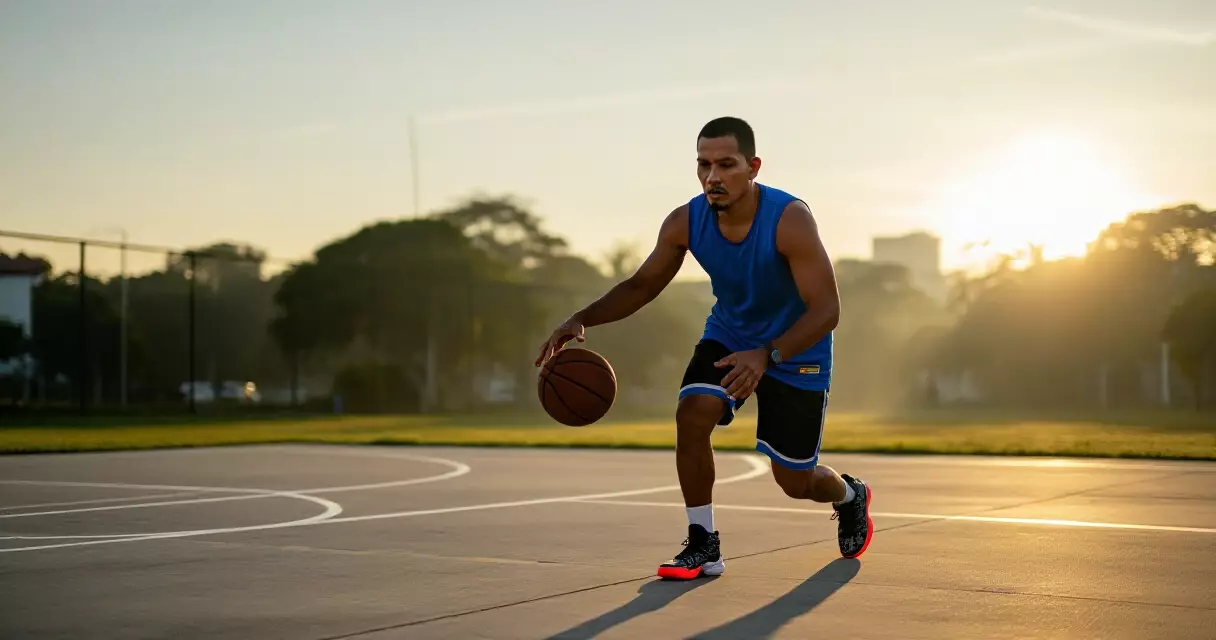
Ball-handling drills are one of the most important and often skipped by ordinary players. According to Level Up Basketball, the more effective way is short but focused daily reps rather than a long session once a week. Here is an example of a ball-handling routine that can be completed in 20 minutes:
- 2 minutes: stationary dribbling on the right and left
- 3 minutes: crossover, between the legs, and behind the back
- 5 minutes: cone drills or chair drills for change of direction
- 5 minutes: speed dribble across the court (full-court drive and finish)
- 5 minutes: shooting off the dribble from the elbow and wing
This routine, when done seven times a week, provides faster improvement than attending just one long game every Saturday.
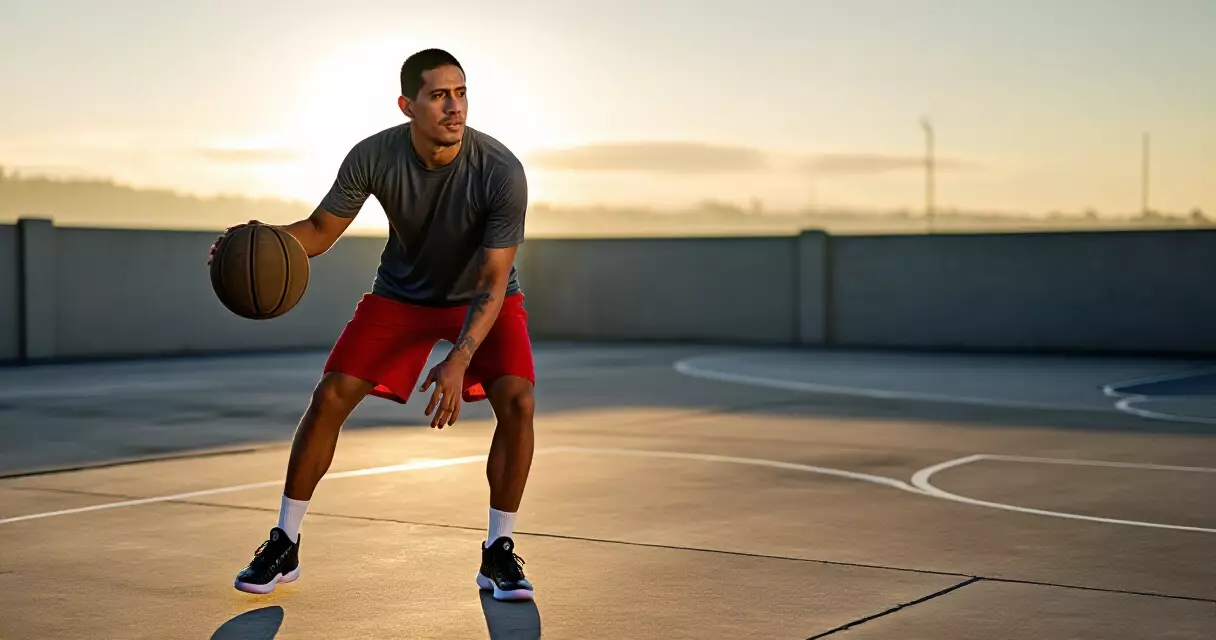
How to Fit into the PBA Practice Routine: The Conditioning Part
The physical conditioning of a PBA player is different from the conditioning of a regular gym-goer. The focus is on basketball-specific fitness: lateral quickness, explosive first step, and endurance within 48 minutes. For an ordinary person, there’s no need to be a bodybuilder. What is needed is the body toughness for repeated sprints, jumps, and defensive slides.
A simple weekly conditioning schedule suitable for an ordinary person with a regular job:
| Day | Conditioning Focus | Duration |
|---|---|---|
| Monday | Sprint intervals (10 × 30m) + agility ladder | 25 minutes |
| Tuesday | Ball-handling drills + shooting (individual work) | 30 minutes |
| Wednesday | Team practice or game | 90 minutes |
| Thursday | Bodyweight strength (push-up, squat, lunge) + shooting | 30 minutes |
| Friday | Jump rope + defensive slide drills | 20 minutes |
| Saturday | Game or scrimmage + post-game shooting | 2 hours |
| Sunday | Rest or light stretching | 15 minutes |
Consistency is more effective than intensity — 30 minutes of focused daily reps is better than a three-hour session once a week.
The Shooting Routine to Do Before and After the Game
The free and effective way to improve shooting is structured repetition. Based on the principle of PBA individual work, here is a shooting routine that an ordinary person can do in 25 minutes:
| Drills | Number of Shots | Goal |
|---|---|---|
| Close mid-range (elbow) | 20 shots each side | Mechanics and consistency |
| Free throws | 30 shots | Pressure shooting |
| Catch and shoot (wing) | 15 shots each side | Game speed release |
| Off-the-dribble mid-range | 10 shots each side | Shot creation |
| Three-pointers (corner) | 10 shots each side | Range extension |
The top players in the PBA Commissioner’s Cup 2026 show high shooting percentages as a result of this type of structured repetition, not just talent.
Mental and Tactical Part: Watching Film Like a PBA Pro
An aspect of the PBA practice routine that is often overlooked by the ordinary person is film study. Professional players watch game recordings to study opponents’ defensive schemes and their own mistakes. For the ordinary person, this can be done by watching PBA, UAAP, or NBA games and actively noting plays and defensive rotations. The analysis of the Gilas Pilipinas roster for the 2026 FIBA Qualifiers, for example, shows how experts assess players’ tactical abilities.
A simple way to use film study for the ordinary player:
- Watch a full PBA game each week with the intention to learn, not just watch
- Observe how guards move without the ball
- Note defensive positioning and help defense rotations
- Write down one thing learned from each game
Team practice is for team plays and defensive schemes — individual skills are each player’s responsibility to train alone.
How an Ordinary Person Can Lead to the PBA D-League
For those seriously dreaming of entering professional basketball, there is a path to follow. According to the Philippine Star, the minimum requirements to be eligible for the PBA Rookie Draft are: natural-born Filipino, at least 5’6″ (168 cm), completed 4 years in college or 4 years since graduating high school, and played at least 7 games in one conference of the PBA Developmental League (D-League). Since the PBA banned direct hiring in 2001, the D-League has become the primary path for those who did not make it to the draft.
The roster changes in professional leagues show that players who go through grassroots development can reach the highest level, as long as they take training seriously.
Frequently Asked Questions (FAQ)
Can an ordinary person keep up with PBA players in practice?
In terms of structure, yes. The PBA team practice is only 90 minutes and focuses on team plays, not individual skills. An ordinary person who takes training seriously can mimic this structure: conditioning before, team plays in the middle, and individual skill work afterward. The difference lies in the level of athletic ability and skill, not in the training format.
How long should the daily practice of an ordinary player be?
Based on the principle of PBA individual work, 45 to 60 minutes of focused daily practice is enough for significant improvement. The key is the quality of each minute, not the duration. 20 minutes of focused ball-handling and 25 minutes of shooting drills are more effective than two hours of unstructured play.
Do you need a gym membership to follow a PBA-inspired practice routine?
No. Most of the individual work done by PBA players before and after team practice can be done on an outdoor court. Conditioning drills, ball-handling, and shooting do not require expensive equipment. A basketball and a court are all you need.
What is the most important skill an ordinary player should focus on?
According to the principle of PBA training, the individual skills that need to be trained separately from team practice are ball-handling, shooting (free throws and mid-range), and conditioning. Among these three, ball-handling provides the quickest results as it directly boosts confidence and decision-making in the game.
How do I know if my training is improving?
One of the most effective ways is to record yourself training and compare it to previous videos. Platforms like Level Up Basketball use AI feedback for mechanics, providing a more objective view than self-assessment alone. Additionally, tracking shooting percentage in each session provides clear data on progress.
What is the difference between a PBA practice routine and an ordinary barangay practice?
The main difference is the intentional separation of individual work and team work. In most barangay practices, everything is combined: there is no clear part for conditioning, ball-handling drills, and team plays. Learning the PBA approach means systematically dividing your practice time into three clear parts, no matter how short your time is.
References
- PBA Rookie 101: How to make it to the Philippines’ premier pro basketball league — Philippine Star — accessed July 13, 2026
- How to Get Better at Basketball: A Complete Guide — Level Up Basketball — accessed July 13, 2026