Summary
How to write sports news with game, score, and statements from coach and player is a skill that every sports journalist aiming to provide accurate, fast, and engaging reports for Filipino sports fans must learn. Knowing who won is not...
Table of contents
- 1 The Foundation: What is Complete Sports News?
- 2 History of Sports Journalism in the Philippines
- 3 How to Write the Lead of Sports News
- 3.1 Examples of Good and Weak Leads
- 3.2 Active Voice in Sports Lead
- 4 How to Include Score and Statistics in the Body of the Report
- 5 How to Write Statements from Coach and Player
- 5.1 Format of Direct Quotes in Filipino Sports Writing
- 5.2 What Questions to Ask the Coach and Player
- 6 Proper Structure of a Complete Sports Article: Step-by-Step
- 7 Mistakes to Avoid in Writing Sports News
- 8 Special Situations: Volleyball, Boxing, and Other Sports
- 9 Digital and Social Media Sports Writing: New Challenges
- 10 Frequently Asked Questions (FAQ)
- 10.1 How many direct quotes are needed in a sports article?
- 10.2 What if direct quotes are not obtained after the game?
- 10.3 Should all player statistics be included in the article?
- 10.4 How do I know if a statement should be a direct quote or paraphrase?
- 10.5 Should the coach or player be informed before publishing their quote?
- 10.6 What is the proper format for a sports article headline in Filipino?
- 11 Summary: Key Lessons
- 12 References
How to write sports news with game, score, and statements from coach and player is a skill that every sports journalist aiming to provide accurate, fast, and engaging reports for Filipino sports fans must learn. Knowing who won is not enough — a true sports story provides the full picture: the score per quarter or set, selected statistics, and the voices of those in the middle of the action.
The Foundation: What is Complete Sports News?
Before learning how to write sports news with game, score, and statements from coach and player, one must understand its structure. According to the sports writing guides of The National Teachers College, complete sports news consists of three main parts: the lead (or introduction), the body of the report, and quotes from participants. These three elements are inseparable — missing even one weakens the entire article.
Sports news differs from other types of news because readers expect to know immediately who won, the score, and why the result was as it was. Therefore, the inverted pyramid format — placing the most important information at the beginning — is the accepted standard in Filipino sports journalism, from campus publications to national media like PBA and UAAP coverage.
History of Sports Journalism in the Philippines
Sports reporting in the Philippines has a long history rooted in the tradition of campus journalism. Since the early 20th century, newspapers like the Manila Times and Philippine Daily Inquirer have featured sports sections as a regular part of their publications. In 1975, when the Philippine Basketball Association (PBA) was established, the space for sports reporting in national newspapers and radio grew significantly. With the advent of digital media in the early 2000s, sports journalism shifted to online and social media platforms, speeding up the delivery of scores and statements from games.
How to Write the Lead of Sports News
The lead or introduction is the most important part when learning how to write sports news with game, score, and statements from coach and player. According to sports writing materials on SlideShare, the lead should contain: (1) who won, (2) the final score, (3) against whom, (4) where and when the game took place, and (5) a unique detail or twist that adds color to the event.
Examples of Good and Weak Leads
The difference is clear when comparing two types of leads. A weak lead is like this: “Ginebra won yesterday’s game.” No score, no opponent, no context. A strong lead is like this: “Barangay Ginebra held off TNT Tropang Giga, 98–91, in the final minute of Game 5 of the PBA Commissioner’s Cup Finals on Saturday at Araneta Coliseum, paving the way for their tenth championship.” A good lead covers all the essential details in a single sentence.
Active Voice in Sports Lead
Filipino sports writing guides recommend using the active voice in the lead because it is clearer and more powerful. For example: “Ginebra held off TNT” (active) compared to “TNT was held off by Ginebra” (passive). The active voice places the action at the center of the sentence, which suits the dynamic nature of sports.
How to Include Score and Statistics in the Body of the Report
After the lead, the body of the article details the flow of the game. This section includes the per-quarter breakdown in basketball (or per-set in volleyball), significant player statistics, and the game’s turning points. Clearly presenting the score per quarter helps readers understand how the game changed — whether there was a comeback, if a team led from start to finish, or if it was neck-and-neck until the last second.
For PBA and UAAP games familiar to Filipino sports fans, a score table is useful. Here is an example of the commonly used format:
| Team | Q1 | Q2 | Q3 | Q4 | Total |
|---|---|---|---|---|---|
| Barangay Ginebra | 24 | 19 | 26 | 29 | 98 |
| TNT Tropang Giga | 22 | 23 | 24 | 22 | 91 |
This table provides a quick reference for readers and demonstrates the writer’s professionalism. According to Writing Sports News for Young Writers, using a score table is one of the most effective ways to present data in a sports article.
How to Write Statements from Coach and Player
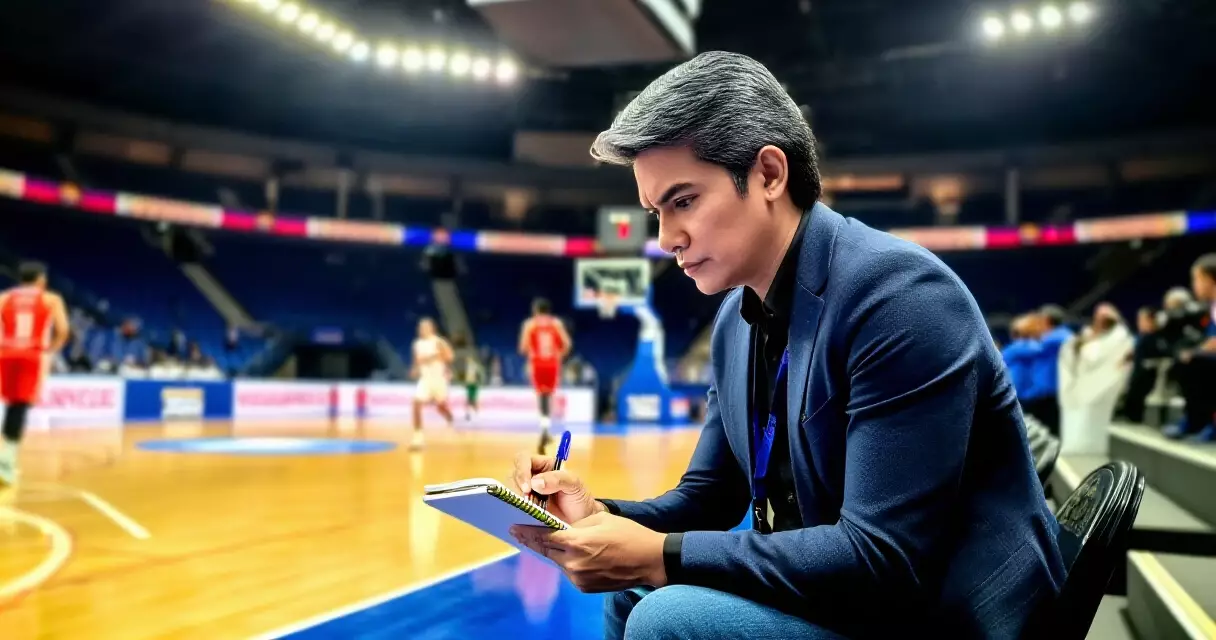
Direct quotes from the coach and leading player bring life to a sports article. This is the part of how to write sports news with game, score, and statements from coach and player that is most challenging but most rewarding. There are two main types of quotes: direct quotes (exact words of the person being quoted, enclosed in quotation marks) and paraphrase (the person’s idea, written in the journalist’s own words).
Format of Direct Quotes in Filipino Sports Writing
The correct format for direct quotes in a Filipino sports article is this: write the quote first, then add the attribution. For example: “We are happy with tonight’s victory, but we know the next game will be tougher,” said Coach Tim Cone after the game. Do not ignore the attribution — always include who spoke and in what context. If the quote is long, it can be divided into two or three paragraphs, and attribution should be included in each section.
What Questions to Ask the Coach and Player
To get a good quote, it’s important to ask open-ended questions that encourage deeper answers. Questions like “How did you stop the opponent’s comeback in the fourth quarter?” yield more than simply “Are you happy with the win?” Quotes that show emotion, strategy, and the athlete’s personality are the most credible parts of a sports article for readers of Balita Sports and similar platforms.
A sports article without direct quotes from the coach or player is like a game without the crowd’s noise — something happened, but the experience is lacking.
If you’re interested in how team rosters and lineups are analyzed before the coach makes a statement, you can read our analysis of the Gilas Pilipinas Roster for the 2026 FIBA Qualifiers as an example of incorporating statistics and team management statements.
Proper Structure of a Complete Sports Article: Step-by-Step
Here is the complete structure of a sports article, from start to finish, based on the accepted standards of Filipino sports journalism:
| Article Part | Content | Estimated Length |
|---|---|---|
| Headline | Name of winner, score, and against whom | 8–12 words |
| Lead / Introduction | Result, score, team, place, date, and unique detail | 30–50 words |
| Quarter/Set Breakdown | Score per quarter or set, turning points | 50–100 words |
| Statistics of Top Players | Points, rebounds, assists, or kills/aces for volleyball | 50–80 words |
| Coach’s Quote | Statement about the game, strategy, or next match | 30–60 words |
| Leading Player’s Quote | Reaction to the game, personal performance, message to the team | 30–60 words |
| Context / Background | Standings, next game, or broader meaning of the result | 40–70 words |
Mistakes to Avoid in Writing Sports News
Even experienced journalists make mistakes from time to time. The following mistakes are repeatedly mentioned in Filipino sports journalism guides:
- Incorrect score or player name — the most dangerous mistake as it immediately damages credibility
- Starting the lead without a score — forcing readers to search for the most basic information
- Excessive use of jargon without explanation — not all readers are experts in the technical terms of each sport
- Using quotes without changing the sentence structure — direct quotes should be exact, not altered
- Forgetting context — the result should be explained in terms of standings or playoffs
- Passive voice in the lead — weakens the impact of the report
Special Situations: Volleyball, Boxing, and Other Sports
The principles of how to write sports news with game, score, and statements from coach and player apply to all types of sports, but there are some differences according to specific sports. In volleyball (UAAP, PVL), the score is narrated according to sets (e.g., 3–1 win, 25–18, 25–22, 22–25, 25–19). In boxing, the result is unanimous decision, split decision, KO, or TKO, and the round when the fight ended. In football (Filipinas or AFC), the result is simpler — number of goals and who scored. For a deeper understanding of how statistics and standings affect the context of your sports article, see our guide on reading PBA Schedule and Standings.
Understanding the rules of each sport is what distinguishes a mediocre sports article from a truly credible report.
Digital and Social Media Sports Writing: New Challenges
In the age of social media and real-time reporting, sports journalists in the Philippines face additional pressure: to be the first to deliver news while maintaining accuracy. UAAP and PBA games are now broadcast on various digital platforms, and readers expect live updates as the game unfolds. In this context, the ability to write quick sports updates — with score, standout player, and preliminary statement — has become an essential skill. After the game, a more detailed post-game article with full statements from the coach and player follows.
For a broader understanding of the new tools used in modern sports journalism in the Philippines, we recommend our report on the Top 5 Players Dominating the 2026 PBA Commissioner’s Cup as an example of incorporating real-time stats and statements in a digital sports article.
Frequently Asked Questions (FAQ)
How many direct quotes are needed in a sports article?
As a minimum, two direct quotes are recommended by campus journalism guides: one from the coach and one from the leading player. If you have more time and access, three to four quotes from different people (e.g., a player from the losing team) enrich the article. The important thing is the quality of the quote, not just the quantity.
What if direct quotes are not obtained after the game?
There are times when the coach or player is not immediately available for an interview. In such situations, official statements from the team or league (press release) or quotes from the post-game press conference, if available, can be used. If none are available, paraphrasing based on official reports can be used, but it should be clearly stated in the article where the information came from.
Should all player statistics be included in the article?
It is not necessary. The standard is the statistics of the top 2–3 players from each team, particularly those who played a significant role in the game’s outcome. The full box score can be placed at the end of the article as a reference for those who want to see the complete data, but the body of the text should focus on significant numbers only.
How do I know if a statement should be a direct quote or paraphrase?
Use direct quotes when the particular way the person speaks has its own value: when it is colorful, descriptive, or shows emotion. Use paraphrase when the content of what is said is important but the manner of saying it has no special effect. In Filipino sports writing, quotes with Tagalog slang or emotional expressions from the player are usually more effective as direct quotes.
Should the coach or player be informed before publishing their quote?
In general journalism standards, quotes from public press conferences or post-game interviews do not need to be shown to the source before publication. However, if there is doubt about the exact words or if the quote is very sensitive, confirming with the source is a good practice. The most important thing is the accuracy of the quote.
What is the proper format for a sports article headline in Filipino?
The headline of a sports article in Filipino should be short, direct, and have an active verb. The present tense is commonly used for a stronger effect: “Ginebra Wins Game 5” instead of “Ginebra Won Game 5.” Guides recommend placing the name of the team or player that is more well-known at the beginning of the headline to quickly capture the reader’s attention, especially in digital and social media.
Summary: Key Lessons
How to write sports news with game, score, and statements from coach and player is a skill that combines structure, accuracy, and creativity. Here are the key points to remember:
- Always start the lead with the result, score, team, place, and date — use active voice
- Follow the inverted pyramid: most important information first, details last
- Include per-quarter or per-set breakdown and statistics of top players
- Get at least two direct quotes: one from the coach, one from the player
- Verify all scores and names before publishing
- Provide context: what the result means for standings or the next game
- In the digital age, also learn to write quick live updates and more detailed post-game analysis
For those who wish to understand the broader context of Filipino sports media, we recommend reading our Balitang Isports Fact Sheet as a complete reference for writing sports news in Filipino.
References
- Chapter 6: Writing Sports News — Nueva Vizcaya State University — retrieved August 9, 2026
- Writing Sports — The National Teachers College — retrieved August 9, 2026
- <a href="htt