Summary
Five golds, eight podium finishes, and over seven decades of history — this is how to describe the overall legacy of Gilas Pilipinas in Asian Games basketball. From the symbolic victory in 1951 in New Delhi to the historic return...
Table of contents
- 1 The History of Gilas Pilipinas in the Asian Games: A Brief Discussion
- 2 The First Golden Age: Heroes of 1951–1962
- 2.1 Number 1: Carlos Loyzaga — The King of Asian Games Basketball
- 2.2 Number 2: Rafael Hechanova — The Pillar of Two Golds
- 2.3 Number 3: Lauro Mumar — The Founder of Tradition
- 3 Additional Heroes of the 1951–1962 Golden Era
- 3.1 Number 4: Moro Lorenzo — The Foundation of 1951
- 3.2 Number 5: Alberto Reynoso — Captain of the 1962 Jakarta Gold
- 4 The Modern Era of Gilas in the Asian Games
- 4.1 Number 6: June Mar Fajardo — The Modern Foundation
- 4.2 Number 7: Scottie Thompson — The Heart of the 2022 Gold
- 5 Other Heroes of the 2022 Hangzhou Championship
- 5.1 Number 8: CJ Perez — The Dagger in the 2022 Final
- 5.2 Number 9: Japeth Aguilar — The Versatile Threat
- 5.3 Number 10: Chris Newsome — The Champion of Consistency
- 6 Table of Key Players and Their Contributions
- 7 The Philippines’ Record in Each Asian Games — Summary
- 8 Why Did the Philippines Dominate Asian Games Basketball?
- 9 Frequently Asked Questions about the Top 10 Best Gilas Pilipinas Players in Asian Games History
- 9.1 How many Asian Games gold medals does the Philippines have in basketball?
- 9.2 Who is considered the greatest Gilas player in Asian Games history?
- 9.3 How did Gilas regain gold in 2022 after 60 years?
- 9.4 What role did naturalized players play in Gilas at the Asian Games?
- 9.5 Who were the members of the Philippines’ 1951 gold-medal team?
- 9.6 Why did the Philippines have a long gap between the 1962 and 2022 gold?
- 10 The Legacy of Great Players Today
Five golds, eight podium finishes, and over seven decades of history — this is how to describe the overall legacy of Gilas Pilipinas in Asian Games basketball. From the symbolic victory in 1951 in New Delhi to the historic return to the top in 2022 in Hangzhou, the Philippine national team has produced iconic players who brought glory to a country known worldwide for its basketball prowess. In this article, we explore the top 10 best Gilas Pilipinas players in the history of the Asian Games — the heroes who laid the foundation and maintained the tradition of excellence.
The History of Gilas Pilipinas in the Asian Games: A Brief Discussion
Before we explore the top 10 best Gilas Pilipinas players in the history of the Asian Games, it is important to understand the broad context of the country’s success. According to Basketball in the Philippines (Wikipedia), the national team won gold in 1951 when basketball was first played at the Asian Games, and continued to dominate Asia until 1962. This is the longest sustained domination by a country in an Olympic-style continental tournament in the history of Asian basketball.
Overall, according to the Philippines men’s national basketball team (Wikipedia), the Philippines has achieved five golds (1951, 1954, 1958, 1962, 2022), one silver (1990), and two bronzes (1986, 1998) in Asian Games men’s basketball — eight podium finishes in total. As a general athletic nation, the country has participated in 19 editions of the Asian Games with a total of 428 medals in all sports, according to Sports in the Philippines (Wikipedia).
The First Golden Age: Heroes of 1951–1962
In discussing the top 10 best Gilas Pilipinas players in the history of the Asian Games, it is inevitable to start with the First Golden Age (1951–1962). According to Inquirer Bandera, in four consecutive Asian Games titles from 1951 to 1962, the Philippines emerged victorious in 23 games and lost only once. These statistics demonstrate how excellent the players of that era were.
Number 1: Carlos Loyzaga — The King of Asian Games Basketball
There is no doubt that Carlos Loyzaga is the most dominant player of Gilas Pilipinas in the entire history of the Asian Games. Known as “The Great Difference,” he was the main figure in the Philippines’ three Asian Games gold medals — 1951 New Delhi, 1954 Manila, and 1962 Jakarta. According to the List of Asian Games medalists in basketball (Wikipedia), Loyzaga led the 1951 gold-medal team and was even the captain of the 1962 championship squad. His skills on the court — from jump shots to defense — laid the foundation for the Philippines as a powerhouse in Asian basketball.
Number 2: Rafael Hechanova — The Pillar of Two Golds
One of the most reliable players of the First Golden Age, Rafael Hechanova was part of both the 1951 New Delhi and 1954 Manila gold-medal teams, based on the List of Asian Games medalists in basketball (Wikipedia). Known for his strong defense and ability to maintain composure in tight situations, Hechanova was one of the most valuable contributors to the Philippines’ back-to-back championship run in the first two editions of the Asian Games.
Number 3: Lauro Mumar — The Founder of Tradition
Like Hechanova, Lauro Mumar participated in both the 1951 and 1954 Asian Games gold-medal campaigns of the Philippines, according to Wikipedia’s basketball medalists roster. As one of the most consistent players of that era, Mumar represented the type of dedication to Gilas that set an example for future generations of national players. His multi-tournament presence in the Asian Games showcases his durable quality and capability.
Additional Heroes of the 1951–1962 Golden Era
Number 4: Moro Lorenzo — The Foundation of 1951
Moro Lorenzo was one of the key players of the historic 1951 New Delhi team that won the Philippines’ first Asian Games basketball gold, according to Wikipedia’s records. In a tournament with a record of 4 wins and 0 losses, this team proved that the Philippines was truly above all Asian competitors. Lorenzo’s role in interior defense and rebounding was critical to the team’s clear dominance throughout the tournament.
Number 5: Alberto Reynoso — Captain of the 1962 Jakarta Gold
Alberto Reynoso was one of the key members of the 1962 Jakarta gold-medal team, the last Asian Games championship of the Philippines before a long hiatus. According to Philippines at the 1962 Asian Games (Wikipedia), alongside Loyzaga as captain, Reynoso was part of a strong roster with prowess in both offense and defense. The 1962 team, led by coach Enrique Crame, proved that the Philippines’ era in Asian basketball was not an accident but a result of systematic development.
The Modern Era of Gilas in the Asian Games
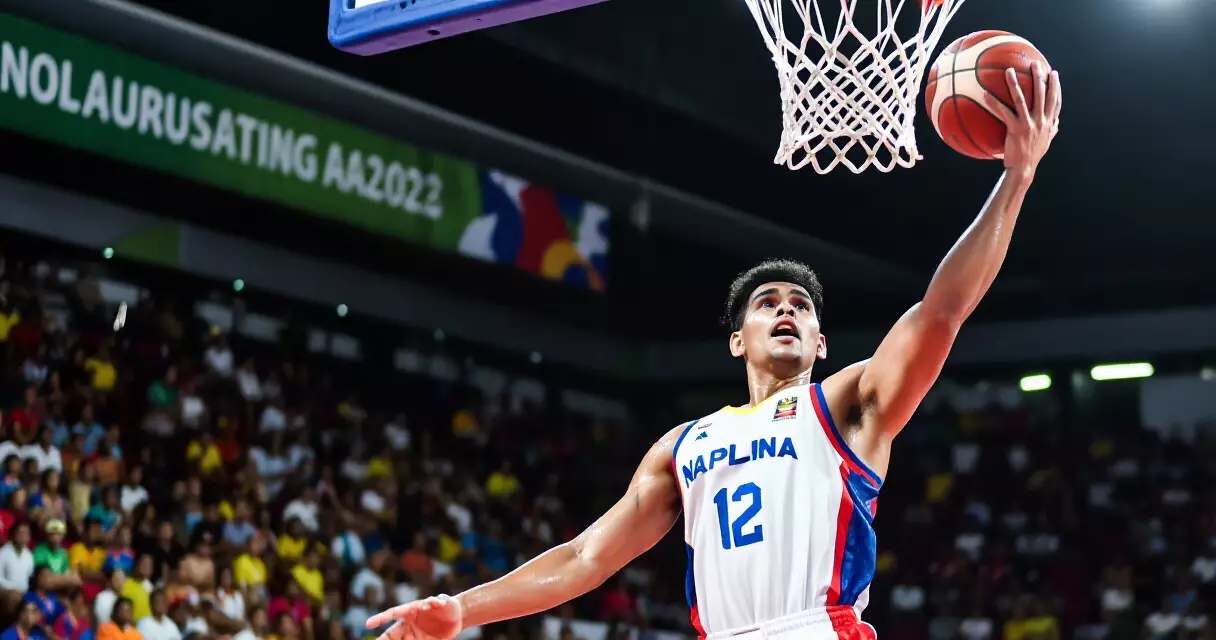
After a long gap between 1962 and 2022, the modern Gilas Pilipinas began to become competitive again in the Asian Games. The decades of 1986 bronze, 1990 silver, and 1998 bronze show that even in years of transition, the Philippines remained among the strongest teams in Asia. The era of PBA professionalism provided a more organized system of talent development, which ultimately resulted in the 2022 Hangzhou championship.
“The 2022 Hangzhou gold was not just a championship — it was proof that Philippine basketball never died, it was only asleep.”
Number 6: June Mar Fajardo — The Modern Foundation
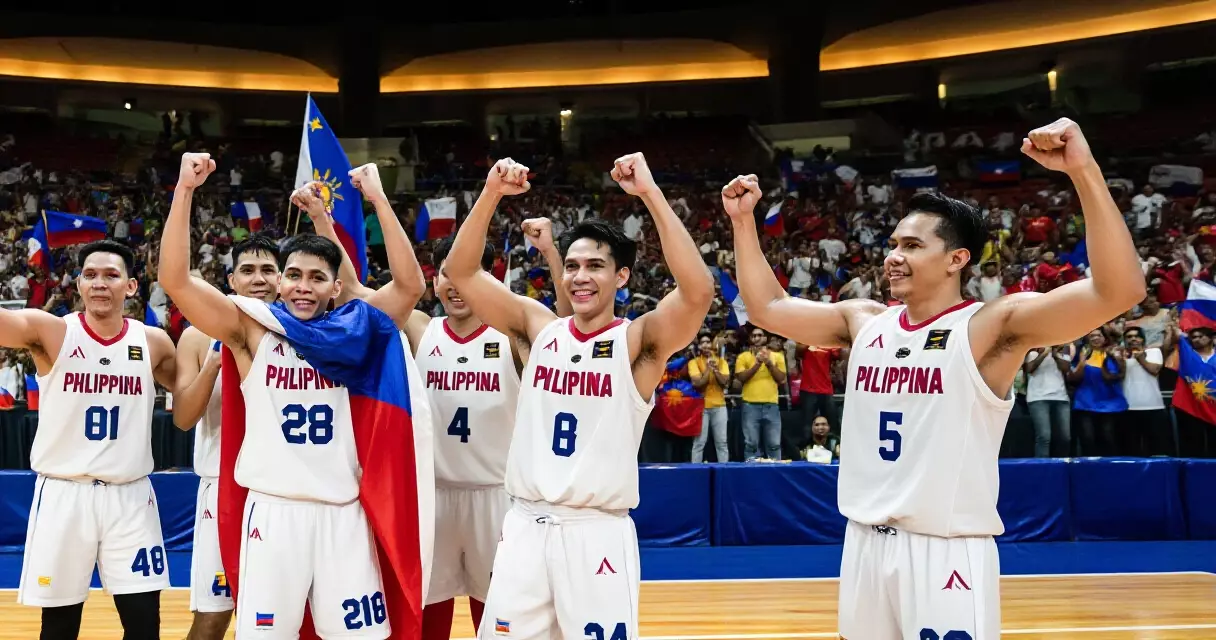
In the modern era, no one is more important on the court for Gilas than June Mar Fajardo. The “San Miguel Kraken” was a key pillar of the Philippines’ 2022 Asian Games gold-medal team in Hangzhou, according to Basketball at the 2022 Asian Games (Wikipedia). As one of the strongest centers in the history of the PBA and Gilas, Fajardo provided a dominant presence inside that was difficult for opponents to counter. His role in the 2022 final against Jordan (70–60) was critical in achieving the Philippines’ fifth gold.
For a deeper analysis of the current Gilas roster, read our Analysis of the Gilas Pilipinas Roster for the 2026 FIBA Qualifiers.
Number 7: Scottie Thompson — The Heart of the 2022 Gold
Scottie Thompson was one of the most versatile players of the Philippines’ 2022 Asian Games gold-medal team. As a point guard capable of leading and scoring in critical moments, Thompson became the heart of Gilas’ game system in Hangzhou. According to the Philippines at the 2022 Asian Games (Wikipedia), Thompson was part of the official roster that brought determination and precision to every tournament game. His ability to play defense and provide assists in crucial moments showcased his leadership on the court.
Other Heroes of the 2022 Hangzhou Championship
Number 8: CJ Perez — The Dagger in the 2022 Final
CJ Perez was one of the most explosive scoring options for Gilas in the 2022 Asian Games. Known for his skill in isolation plays and fast-break situations, Perez provided a dangerous scoring punch outside the paint that frustrated opponents. His presence in the 2022 Hangzhou gold-medal run highlights the importance of wing scorers for Gilas’ success in the Asian Games.
Number 9: Japeth Aguilar — The Versatile Threat
The tall man Japeth Aguilar provided Gilas with crucial stretch-four capability in the 2022 Asian Games. With his ability to score from mid-range and tighten inside, Aguilar gave the coaching staff multiple strategies against different types of defenses. As a multi-time PBA champion and All-Star, his experience and excellence added depth to the Philippines’ roster in Hangzhou.
Number 10: Chris Newsome — The Champion of Consistency
As one of the most consistent guards of the Philippines in international competition, Chris Newsome contributed crucial points and assists throughout Gilas’ 2022 Asian Games run. His ability to play high-energy basketball in multiple positions gave Gilas a flexible option in all game situations. Newsome, along with other members of the 2022 roster, proved that the modern Gilas has enough quality to win at the highest level of Asian basketball.
For those interested in upcoming Gilas matches, don’t miss our preview of Gilas Pilipinas vs New Zealand in the 2026 FIBA World Cup Qualifiers.
Table of Key Players and Their Contributions
| Rank | Player | Asian Games Gold(s) | Era |
|---|---|---|---|
| 1 | Carlos Loyzaga | 1951, 1954, 1962 | Classical (1950s–1960s) |
| 2 | Rafael Hechanova | 1951, 1954 | Classical (1950s) |
| 3 | Lauro Mumar | 1951, 1954 | Classical (1950s) |
| 4 | Moro Lorenzo | 1951 | Classical (1950s) |
| 5 | Alberto Reynoso | 1962 | Classical (1960s) |
| 6 | June Mar Fajardo | 2022 | Modern (2010s–2020s) |
| 7 | Scottie Thompson | 2022 | Modern (2020s) |
| 8 | CJ Perez | 2022 | Modern (2020s) |
| 9 | Japeth Aguilar | 2022 | Modern (2010s–2020s) |
| 10 | Chris Newsome | 2022 | Modern (2020s) |
The Philippines’ Record in Each Asian Games — Summary
| Year and Location | Result | Key Players |
|---|---|---|
| 1951 New Delhi | Gold (4–0 record) | Loyzaga, Hechanova, Mumar, Lorenzo |
| 1954 Manila | Gold | Loyzaga, Hechanova, Mumar, Genato |
| 1958 Tokyo | Gold | Philippine cagers |
| 1962 Jakarta | Gold | Loyzaga (captain), Reynoso, Arazas |
| 1986 | Bronze | Transition generation |
| 1990 Beijing | Silver (lost to China, 90–76) | Post-Loyzaga era |
| 1998 Bangkok | Bronze (70–68 against Kazakhstan) | PBA stars |
| 2022 Hangzhou | Gold (70–60 against Jordan) | Fajardo, Perez, Thompson, Newsome |
Why Did the Philippines Dominate Asian Games Basketball?
The success of the Philippines in Asian Games basketball was not by chance. According to Basketball in the Philippines (Wikipedia), basketball became the country’s main sport in the early 20th century, providing a long culture of learning and training that most Asian rivals lacked during the early Asian Games. The result was a team with a higher level of technical skill, organizational discipline, and competitive experience than almost all opponents.
In modern times, the PBA system provides an excellent pool of professional players with experience in high-level competition. This gives Gilas the ability to compete with any team in Asia — and the 2022 Hangzhou gold is proof of this system.
“In four consecutive Asian Games titles from 1951 to 1962, the Philippines emerged victorious in 23 games and lost only once — a record that demonstrates excellence rarely seen in the history of any regional sport.”
For a deeper assessment of the Philippines’ prospects in the next Asian Games, read our Analysis of Gilas Pilipinas Lineup and Tactics for the FIBA Asia Cup Qualifiers 2026.
Frequently Asked Questions about the Top 10 Best Gilas Pilipinas Players in Asian Games History
How many Asian Games gold medals does the Philippines have in basketball?
According to Basketball at the Asian Games (Wikipedia), the Philippines has achieved five golds in Asian Games men’s basketball: in 1951 (New Delhi), 1954 (Manila), 1958 (Tokyo), 1962 (Jakarta), and 2022 (Hangzhou). In total, the country has eight podium finishes in men’s basketball, including one silver (1990) and two bronzes (1986, 1998).
Who is considered the greatest Gilas player in Asian Games history?
Based on his three gold medals (1951, 1954, 1962) and his role as the main star and captain of the championship teams, Carlos Loyzaga is widely considered the greatest Gilas player in Asian Games history. His contribution to the first two decades of Asian Games basketball is unmatched in the history of the national team.
How did Gilas regain gold in 2022 after 60 years?
The Philippines’ 2022 Asian Games gold was made possible by a combination of world-class PBA stars like June Mar Fajardo, Scottie Thompson, CJ Perez, Japeth Aguilar, and Chris Newsome, along with naturalized player Justin Brownlee. According to Basketball at the 2022 Asian Games (Wikipedia), the Philippines defeated Jordan in the final, 70–60, to win the gold medal in Hangzhou.
What role did naturalized players play in Gilas at the Asian Games?
In the 2022 Asian Games, Justin Brownlee was the main naturalized player for the Philippines. However, in October 2023, according to a statement by the International Testing Agency, Brownlee was announced to have tested positive for a substance banned by the World Anti-Doping Agency (WADA) related to the said tournament. This sparked a deep discussion about the Philippines’ naturalized player program and the regulations of international basketball.
Who were the members of the Philippines’ 1951 gold-medal team?
Based on the List of Asian Games medalists in basketball (Wikipedia), the 1951 New Delhi gold-medal team of the Philippines consisted of: Francisco Calilan, Andres dela Cruz, Genaro Fernandez, Jose Gochangco, Rafael Hechanova, Moro Lorenzo, Carlos Loyzaga, Antonio Martinez, Lauro Mumar, Ignacio Ramos, Meliton Santos, and Mariano Tolentino. They won 4 games and lost none throughout the tournament.
Why did the Philippines have a long gap between the 1962 and 2022 gold?
The 60-year gap was the result of multiple factors: the rise of Asian basketball powers like China, Korea, and Iran; changes in international competition; and the development of more competent teams across Asia. However, throughout this period, the Philippines remained competitive — evidenced by the silver (1990) and two bronzes (1986, 1998) the country secured in the intermediate years.
The Legacy of Great Players Today
The top 10 best Gilas Pilipinas players in the history of the Asian Games showcase two distinct yet complementary eras of excellence in Philippine basketball. From the classical era of the 1950s and 1960s to the modern resurgence in the 2020s, these players have left an indelible mark on the sport, inspiring future generations to uphold the tradition of excellence and strive for greatness on the Asian stage.