
Summary
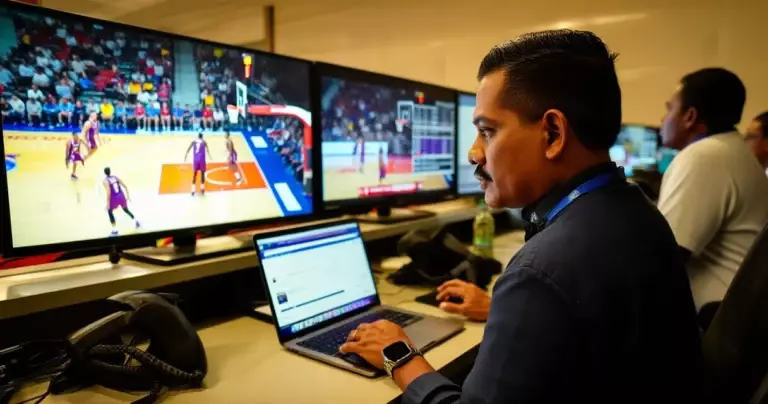
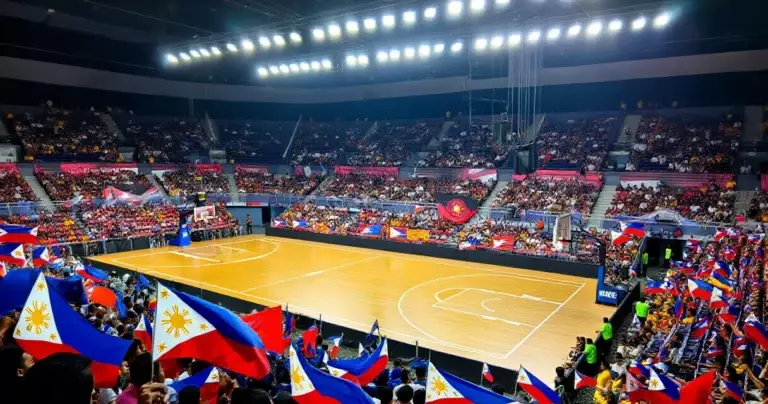
In August 2026, the way news is delivered in the PBA and UAAP has significantly changed. The trend in 2026: new AI and real-time stats tools for faster news in the PBA and UAAP is not just a technological shift...
Table of contents
- 1 How AI Changed Sports Journalism in the Philippines
- 2 A Brief History: From Manual Reporting to Real-Time Tools
- 3 Key AI Tools Used in Sports News Coverage Today
- 4 Real-Time Stats in the PBA: How It Works
- 4.1 The Role of the Official PBA Stats Feed
- 4.2 Advanced Analytics: Beyond the Box Score
- 5 AI and Real-Time Tools in UAAP Coverage
- 6 Comparison of Major Real-Time Stats Platforms
- 7 Benefits of AI-Powered Sports Reporting for Filipino Fans
- 8 Challenges and Limitations of AI in Filipino Sports Media
- 9 The Future of AI Sports Coverage in the Philippines
- 10 Frequently Asked Questions (FAQ)
- 10.1 What does “real-time stats” mean in the context of the PBA and UAAP?
- 10.2 How do sports writers use AI in their work?
- 10.3 Are AI-generated sports articles reliable?
- 10.4 What sports stats apps are best for Filipino fans?
- 10.5 Are there AI tools that support the Filipino language for sports reporting?
- 10.6 How does AI affect the jobs of sports journalists in the Philippines?
- 11 Summary and Key Lessons
- 12 References
In August 2026, the way news is delivered in the PBA and UAAP has significantly changed. The trend in 2026: new AI and real-time stats tools for faster news in the PBA and UAAP is not just a technological shift — it is a revolution in how Filipino sports fans receive information accurately and immediately after each game.
How AI Changed Sports Journalism in the Philippines
The advent of artificial intelligence in the field of sports journalism did not happen overnight. For several years, global organizations like Reuters and Associated Press have gradually adopted automated reporting tools for simple game result reports. In the Philippines, this technology began to grow in 2024 and accelerated significantly from 2025 to 2026. According to reports from BBC Sport, AI-generated sports summaries sped up the publishing process of match reports by up to 70 percent compared to traditional writing methods.
In the context of the PBA and UAAP, the challenge has always been present: many games, many statistics, and a large number of fans seeking immediate information. The trend in 2026 of new AI and real-time stats tools for faster news directly addresses this challenge.
A Brief History: From Manual Reporting to Real-Time Tools
Before the arrival of digital tools, reporting on PBA and UAAP games required reporters to be physically present in the arena, taking notes and sending their reports via phone or fax. In the early 2000s, real-time blogging of games became possible. From 2015 to 2020, sports stats APIs emerged, providing automated data feeds. According to data from the Reuters Institute for the Study of Journalism at the University of Oxford, the use of automated content tools in newsrooms increased significantly from 2020 to 2025, particularly in sports reporting where structured data — such as box scores — is easily processed by algorithms.
In the Philippines, the PBA was one of the first local leagues to provide official stats feeds to its media partners. The UAAP followed suit with its own digital infrastructure during its Season 85 and 86, paving the way for faster integration of real-time data across various platforms.
Key AI Tools Used in Sports News Coverage Today
In 2026, the following types of tools are most common within sports newsrooms covering the PBA, UAAP, and other local leagues:
- Natural Language Generation (NLG) platforms — Tools like Automated Insights’ Wordsmith and Amazon’s sports data processing pipeline are used by major sports media organizations to automatically generate match summaries based on live box score data.
- Real-time Stats APIs — Services like Sportradar and Stats Perform provide live data feeds directly fed into websites and apps, including live scores, player tracking, and advanced analytics.
- AI-assisted editorial tools — Programs that help reporters draft reports faster by suggesting sentences based on inputted stats.
- Chatbot and push notification systems — Systems that automatically send alerts to subscribers when significant game events occur (buzzer beater, technical foul, injury, etc.).
Real-Time Stats in the PBA: How It Works
The Role of the Official PBA Stats Feed
The Philippine Basketball Association maintains its own official statistics updated by their in-house stats crew for each game. This data — including points, rebounds, assists, steals, blocks, and shooting percentages — is immediately available to media partners and on the official PBA website after each quarter. This system forms the foundation upon which the real-time stats tools used by sports news platforms today are based. For fans wanting a deeper understanding of game statistics, it’s also important to know additional details such as the top players in the 2026 PBA Commissioner’s Cup.
Advanced Analytics: Beyond the Box Score
Modern sports analytics no longer stop at simple counts of points and rebounds. In 2026, platforms serving PBA coverage have begun incorporating advanced metrics such as Player Efficiency Rating (PER), True Shooting Percentage (TS%), and Win Shares. According to data shared by international sports analytics firms, such advanced data provides deeper context into player performance.
AI and Real-Time Tools in UAAP Coverage
The UAAP, as one of the most popular college sports leagues in the Philippines, faces unique challenges in digital coverage: games are often watched by thousands of students and alumni eager for live updates. The trend in 2026 of new AI and real-time stats tools for faster news in the UAAP has resulted in a more interactive experience for fans.
For example, some sports media platforms now offer live play-by-play text commentary automatically generated from official game data, along with push notifications for game events. This system allows players, coaches, and fans to access real-time information even without direct access to the game broadcast.
“The real change is not just in the speed of information, but in its quality — AI can now contextualize statistics within seconds.”
Comparison of Major Real-Time Stats Platforms
Here is a comparison of well-known platforms and tools used in sports data coverage, based on their official documentation and industry reports:
| Platform / Tool | Main Use | Coverage of Filipino Leagues | Level of AI Integration |
|---|---|---|---|
| Sportradar | Live data feeds, odds data, video | Limited (international focus) | High (AI-driven widgets) |
| Stats Perform | Advanced analytics, NLG reporting | Limited to local leagues | High (Opta data + AI) |
| Genius Sports | Live stats, streaming technology | Some local partnerships | Moderate to high |
| PBA Official Stats System | Official box scores, league data | PBA only | Moderate (in-house system) |
| UAAP Digital Platform | Live scores, standings, highlights | UAAP only | Moderate |
Benefits of AI-Powered Sports Reporting for Filipino Fans
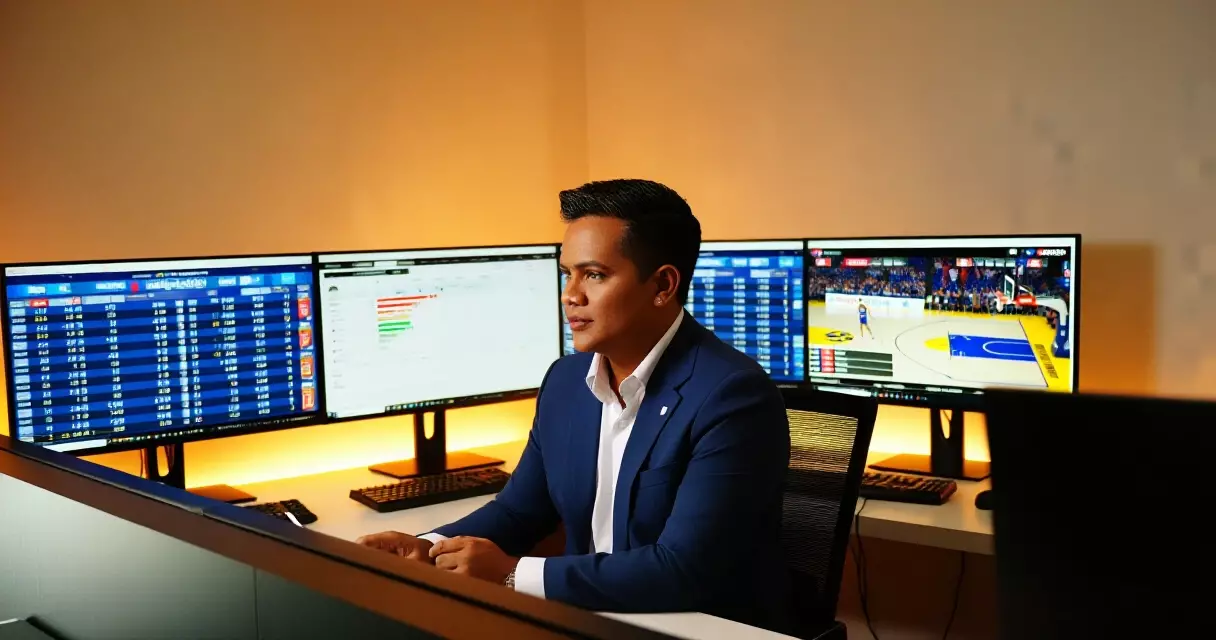
The direct benefits of this trend in 2026 to Filipino sports fans are evident in several aspects:
- Faster news — Game reports are released within minutes after the final buzzer, no longer requiring long waits.
- More accurate statistics — Since data is automatically sourced from official feeds, the likelihood of human error in recording stats is reduced.
- Personalized experience — AI-powered apps can suggest content based on user preferences, such as favorite teams or players.
- 24/7 access — Reporters no longer need to stay up late to cover late-night games; automated systems operate continuously.
- Deeper context — Advanced analytics provide a deeper understanding of the game than just the final score.
Challenges and Limitations of AI in Filipino Sports Media
Not everything is positive when it comes to integrating AI in sports journalism. There are significant challenges that Filipino sports media organizations must face:
First, the issue of language. Most available AI tools are designed for English-language content. Generating natural-sounding Filipino or Tagalog sports content is more complex and requires special training of language models. This is an area where local platforms need to invest in their own AI solutions.
Second, the issue of data access. Not all local leagues have official digital data feeds available to third-party developers. The process of creating sports articles in the PBA and UAAP remains manual in many aspects due to the limited availability of structured data.
| Challenge | Current Status (2026) | Possible Solution |
|---|---|---|
| Filipino language AI | Limited available tools | Local AI development, fine-tuning of large models |
| Official data feeds | Only PBA and UAAP have structured feeds | Expansion of digital partnerships by leagues |
| Accuracy verification | Still requires human editing | Hybrid workflow: AI draft + human review |
| Context and culture | AI is weak in cultural nuance | Filipino editors correcting AI output |
| Technology costs | Premium stats platforms are expensive | Cooperation of local media outlets |
The Future of AI Sports Coverage in the Philippines
Based on observable trends in 2026, the direction of AI and real-time stats tools in Filipino sports media is very clear. The following are expected to happen in the coming years:
- More local sports platforms will adopt AI-assisted reporting.
- Filipino-language NLG tools will become more available as the local tech ecosystem grows.
- PBA and UAAP players will have more detailed performance profiles accessible to the public.
- Real-time data visualization — interactive charts and graphs — will become a standard part of sports coverage.
- AI-powered video analysis will gradually enter the identification of key moments in the game.
“For the Filipino sports fan, the best result of the AI revolution is simple: more accurate information, faster, and in a language they understand.”
This development is not isolated from the broader context of the Philippine sports ecosystem. For example, the success of Gilas Pilipinas in international competitions is easier for fans to follow due to real-time update tools. You can read more about the analysis of the Gilas Pilipinas roster for a deeper understanding of how players use statistics in their preparation.
Frequently Asked Questions (FAQ)
What does “real-time stats” mean in the context of the PBA and UAAP?
“Real-time stats” refers to game statistics that are updated immediately as the game progresses — no need to wait for the end of the quarter or the entire game. This includes live counts of points, rebounds, assists, and more, accessible on the official league’s website, app, or social media or its media partners.
How do sports writers use AI in their work?
Sports writers use AI as a tool to speed up the writing process. A reporter may use AI to automatically generate a first draft of a match report based on box score data, then edit it to add context, quotes from players, and personal analysis. AI does not replace the reporter — it serves as an assistant that speeds up careful work.
Are AI-generated sports articles reliable?
It depends on the source of the data and the editorial process of the platform. AI-generated reports based on official data feeds from the PBA or UAAP are generally accurate in terms of numbers and statistics. However, interpretation and context still require human judgment. Always check if the platform uses official data and if there is an editorial verification process.
What sports stats apps are best for Filipino fans?
For the PBA, the official PBA app and website are the most reliable sources of live scores and stats. For the UAAP, the official UAAP platform provides live updates during the season. International platforms like ESPN and Yahoo Sports also offer coverage of some Philippine sports events, although their focus is primarily on international leagues.
Are there AI tools that support the Filipino language for sports reporting?
As of 2026, dedicated Filipino-language AI sports reporting tools are still limited. Most available NLG platforms operate in English. However, general large language models like ChatGPT and various tech companies’ own products can generate basic content in Filipino, although significant editing by native speakers is still required.
How does AI affect the jobs of sports journalists in the Philippines?
According to industry reports, AI does not primarily eliminate sports journalists’ jobs but changes the type of work they do. Repetitive tasks such as recording basic stats become automated, providing more time for reporters to focus on investigative reporting, in-depth features, and personal interactions with athletes and coaches. According to the Reuters Institute, the most successful newsrooms are those that treat AI as a tool for collaboration, not a replacement for people.
Summary and Key Lessons
The trend in 2026 of new AI and real-time stats tools for faster news in the PBA and UAAP represents a significant shift in Filipino sports media. It’s not about replacing journalists with robots, but about enhancing their ability to deliver faster, more accurate, and more contextual information to millions of Filipino sports fans.
For readers, the most important thing is understanding the source of the information they receive — receiving fast news is more valuable if you know that the data comes from official and reliable sources. For platforms like BalitaSports, the continued integration of technology and human expertise is the key to delivering the highest quality sports coverage for the Filipino audience. You might also be interested in learning how roster changes in MPL Philippines 2026 work, which is another example of the type of real-time sports news evolving with the help of digital tools.
References
- Reuters Institute for the Study of Journalism, University of Oxford — accessed on August 6, 2026
- Associated Press (AP News) — accessed on August 6, 2026
- Reuters Technology Coverage — accessed on August 6, 2026
- BBC Sport — accessed on August 6, 2026
- DataReportal: Digital 2026 Philippines Report — accessed on August 6, 2026