Summary
✓Reviewed by James Carter The Gilas Pilipinas puso motto origin and meaning in basketball is one of the most significant stories in the history of Philippine national sports. Just one word — puso — yet within it lies the entire...
Table of contents
- 1 What Does “Puso” Mean in Philippine Basketball
- 2 Origin of the Gilas Pilipinas Puso Motto: A Historical Look
- 3 Coach Chot Reyes and the Rise of the PUSO Battle Cry
- 4 Marc Pingris and the Personal Meaning of PUSO
- 5 The Gilas Pilipinas Puso Motto Origin and Meaning at the 2013 FIBA Asia Championship
- 5.1 The 2014 FIBA World Cup: The Result of PUSO
- 5.2 PUSO at the 2023 FIBA World Cup
- 6 The Meaning of PUSO in Filipino Culture: Beyond Basketball
- 7 The Gilas Pilipinas Puso Motto Origin and the Debate: Is PUSO Still Enough?
- 8 PUSO Today: Gilas Pilipinas in 2026
- 9 PUSO Timeline: Key Moments in Gilas History
- 10 Frequently Asked Questions About the Gilas Pilipinas Puso Motto
- 10.1 When was PUSO first used as the battle cry of Gilas Pilipinas?
- 10.2 Who popularized PUSO in Gilas Pilipinas?
- 10.3 How is PUSO different from other basketball battle cries?
- 10.4 Is PUSO still being used today in 2026?
- 10.5 Does PUSO relate to Philippine basketball history before 2013?
- 10.6 How did PUSO become a symbol of national unity?
- 11 References
The Gilas Pilipinas puso motto origin and meaning in basketball is one of the most significant stories in the history of Philippine national sports. Just one word — puso — yet within it lies the entire soul of Filipino basketball: the courage of the underdog, sacrifice, and the collective belief of a nation in its players on the court. Today, August 26, 2026, this battle cry lives on in every Gilas game, every huddle, and in the heart of every Filipino who loves the game.
What Does “Puso” Mean in Philippine Basketball
According to Rappler, in its literal translation, puso is the Tagalog word for “heart” in English. But in the context of Gilas Pilipinas and Philippine basketball, its meaning goes far beyond a simple translation. It expresses strength of spirit, resilience, a readiness to fight even when all odds are against you, and the love that gives life to every player on the court.
As a Filipino word, puso carries a cultural weight that no English equivalent can fully convey. It is the word Filipinos use to describe their way of fighting: not always the tallest, not always the most skilled — but always the most passionate, the most courageous, and the most willing to give everything for victory.
Origin of the Gilas Pilipinas Puso Motto: A Historical Look
Even before the historic 2013 run of Gilas, a culture of “puso” already existed in Philippine basketball. According to an archival coverage of the 1993 SEA Games, the Philippines’ rag-tag team of that era already displayed the same kind of spirit — fighting despite being small, fighting despite being the underdog. “Puso” as a concept had long been flowing through the veins of Filipino sports.
The modern Gilas program was officially established in 2009 under the Smart-Gilas program of the Samahang Basketbol ng Pilipinas (SBP). The word “Gilas” itself carries a Filipino meaning of elegance, skill, and excellence — qualities the national team wanted to incorporate into its identity. Before this, the team was called “Team Pilipinas” or carried corporate monikers such as “Centennial Team.”
But the word “PUSO” as the most recognized battle cry rose to prominence during the 2013 FIBA Asia Championship. There, under the coaching of Chot Reyes, Gilas ran a historic campaign that resulted in their return to the FIBA World Cup stage after 36 years of absence.
Coach Chot Reyes and the Rise of the PUSO Battle Cry
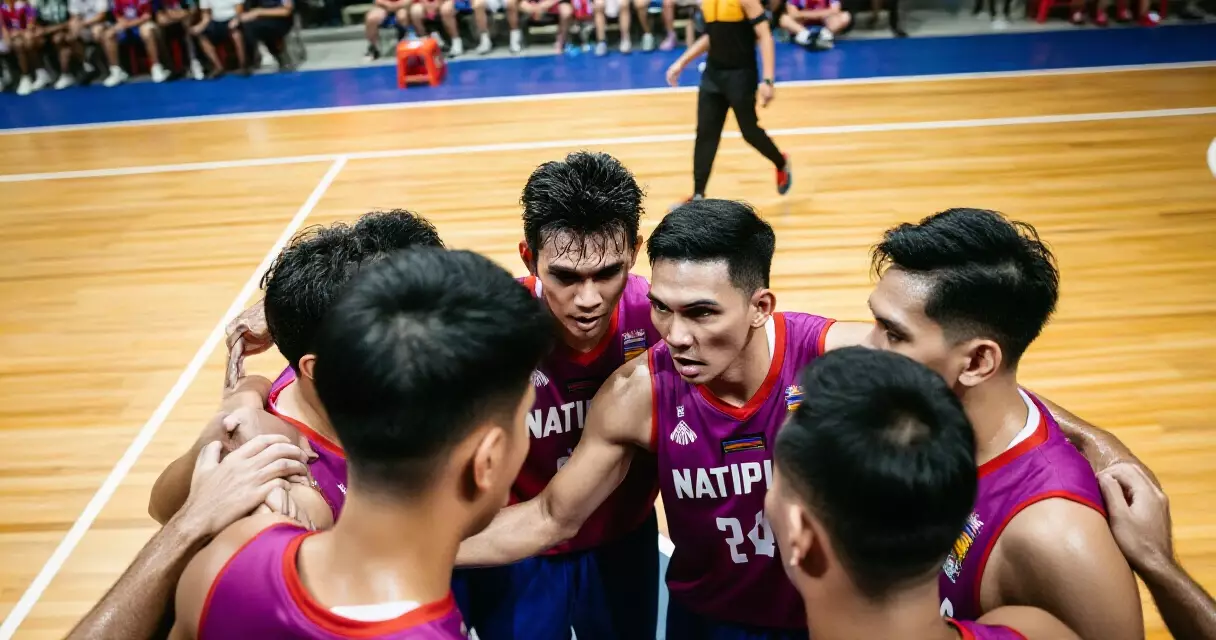
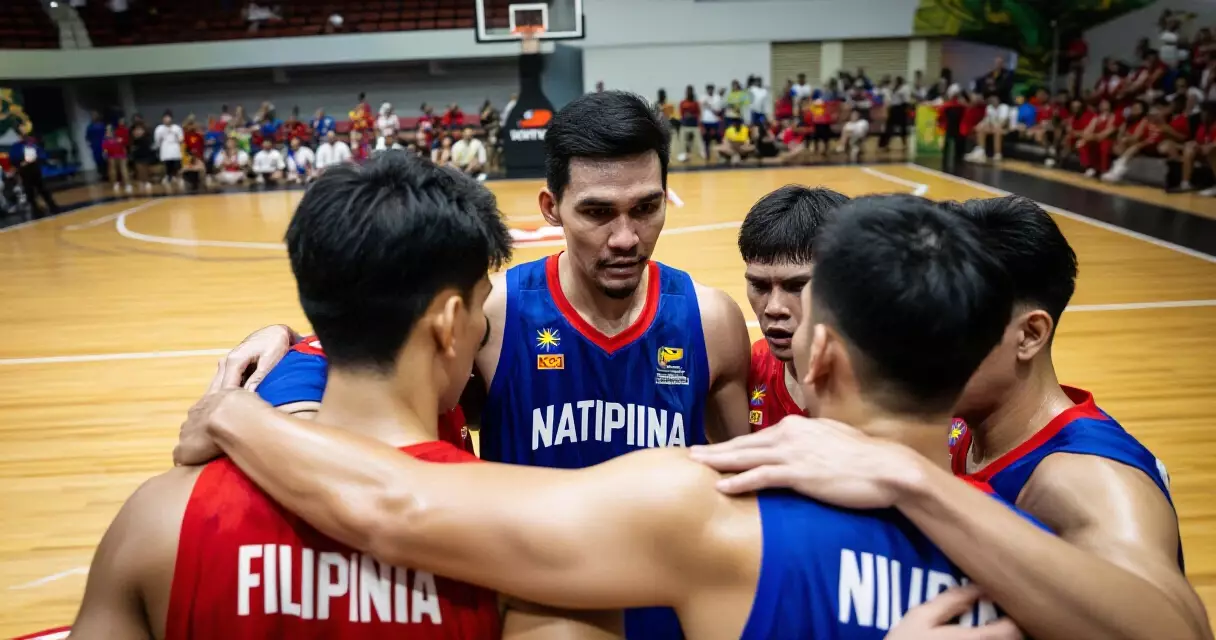
The most recognizable figure in the modern history of the PUSO battle cry is Coach Chot Reyes. According to a detailed report by SPIN.ph, Reyes made it a habit to gather the players at midcourt at the end of practice, and in front of cameras and fans, shout “PUSO!” as a final inspiration before every game and training session.
This ritual was not mere performance. For Reyes and the entire Gilas program, PUSO represented their philosophy of the game: the belief that even if smaller, even if lower-ranked, the Filipino player can and should fight with everything they have. In 2023, after many years, GMA Network reported that Reyes reaffirmed that “Puso” remains Gilas’s battle cry even as he compared the 2014 and 2023 FIBA World Cup squads.
“PUSO will always be the rallying cry of Gilas Pilipinas — then, now, and in the future — because it is the soul of the Filipino player.” — Coach Chot Reyes, as reported by GMA Network, 2023
Marc Pingris and the Personal Meaning of PUSO
If Chot Reyes popularized PUSO in the Gilas dugout, Marc Pingris became its face for players and fans alike. According to a SPIN.ph feature from January 2022, PUSO for Pingris has deep personal roots in his life: his mother’s sacrifice and hard work, his underdog journey throughout his career, and his love of the game as a means of building a better future for his family.
For him, PUSO is not just a basketball chant. It is a way of living and playing. And because of his story, many Filipino fans related to it deeply and felt a stronger connection to the battle cry. PUSO became a symbol for every Filipino who works tirelessly for their loved ones and their dreams.
The Gilas Pilipinas Puso Motto Origin and Meaning at the 2013 FIBA Asia Championship
The most important and historic moment for the PUSO battle cry was the 2013 FIBA Asia Championship. According to Inquirer Sports, this was where the entire nation rallied behind a single battle cry as the Philippines watched their national team compete against bigger and more established teams across Asia.
According to reports, in that championship, Gilas confronted the “Korean curse” — a longstanding failure of the Philippines to defeat South Korea in major FIBA competition. With the help of key players such as Jimmy Alapag, Marc Pingris, and Ranidel de Ocampo, Gilas managed to upset the expected results and secure a FIBA World Cup berth. For many Filipinos, that campaign was the strongest proof that PUSO alone is enough to overcome any obstacle.
The 2014 FIBA World Cup: The Result of PUSO
The result of the 2013 campaign was the Philippines’ return to the FIBA World Cup stage in 2014 in Spain — the nation’s first appearance on the world stage after 36 years of absence, according to a report by GMA Network. This achievement was not visible in scores alone — it inspired the next generation of Filipino players and reinforced the concept of PUSO as a national basketball identity.
PUSO at the 2023 FIBA World Cup
Ten years after 2013, at the 2023 FIBA World Cup held in the Philippines, the powerful cry was heard again. As host nation and with a new generation of players, Gilas brought the PUSO ethos to a new level — combining the emotion of the battle cry with a more advanced system of play and player development.
The Meaning of PUSO in Filipino Culture: Beyond Basketball
According to Discover Philippines, basketball was introduced to the country in the early 1900s by American teachers and soldiers who brought the game as part of colonial culture. Since then, the Philippines has become one of the most passionate basketball nations in the world. PUSO, in this context, is the fruit of a hundred years of history and the nation’s relationship with the game.
As described by PhilStar Freeman, PUSO is not merely a sports chant — it is a mirror of the broader Filipino culture: being courageous in the face of scarcity, fighting when all odds are against you, and giving everything even when you have little to give. In a nation that often feels like an underdog on the world stage, PUSO has become an articulation of national sentiment.
The Gilas Pilipinas Puso Motto Origin and the Debate: Is PUSO Still Enough?
As Philippine basketball deepens its engagement with analytics and player development, a significant discourse has emerged: is PUSO still sufficient as the foundation of national team identity? According to an in-depth analysis by The Game (OneMega) in December 2024, there is a growing argument that Philippine basketball needs to tighten its reliance on PUSO and shift toward more systematic talent development, player development, and tactical sophistication.
But for many fans and players, the answer is simple: there is no need to choose. PUSO and the system can coexist. The battle cry provides the emotional foundation, while modern coaching and player development provide the technical capability. In 2026, this is the direction Gilas is heading through a more professionalized approach to selection, training, and competition strategy, as seen in the analysis of the Gilas roster for the 2026 FIBA Qualifiers.
Philippine basketball does not have to choose between heart and system — the strongest Gilas is the one that combines both.
PUSO Today: Gilas Pilipinas in 2026
Today, August 26, 2026, PUSO remains central to the identity of Gilas Pilipinas. In every international competition, from the FIBA World Cup 2027 Qualifiers to the FIBA Asia Cup, PUSO is heard from Filipino fans in the arena, on social media, and in the conversations of every household that loves basketball. It has grown beyond a simple slogan — it has become part of the language the entire nation uses for sports.
As Gilas continues its campaign in the 2026 and 2027 qualifiers with a new roster and a new generation of players, PUSO serves as a bridge between the past and future of Philippine basketball — a reminder that all past successes came from one spirit, and all future successes must be built on the same foundation.
PUSO Timeline: Key Moments in Gilas History
| Year | Moment | Connection to PUSO |
|---|---|---|
| 1993 | SEA Games Gold Medal Game vs. Thailand | Earliest documented example of PUSO spirit in archival coverage |
| 2009 | Establishment of Smart-Gilas / Gilas Pilipinas program | National team officially given an identity under the SBP |
| 2013 | FIBA Asia Championship — Gilas secures World Cup berth | PUSO becomes the primary battle cry under Coach Chot Reyes |
| 2014 | FIBA World Cup in Spain — return after 36 years | Clearest result of the PUSO ethos on the international stage |
| 2023 | FIBA World Cup in the Philippines as host nation | PUSO reaffirmed by Chot Reyes; new generation, same spirit |
| 2026 | FIBA World Cup 2027 Qualifiers | PUSO remains at the center of Gilas identity today |
| Term | Literal Meaning | Meaning in Basketball Context |
|---|---|---|
| Puso | Heart (the physical heart) | Courage, determination, collective fighting spirit |
| Gilas | Elegance, skill, excellence | Identity of the national team as capable and dignified |
| Laban | Fight / Battle | Fierce competitiveness, readiness to face any opponent |
| Puso-tivity | Portmanteau of Puso + positivity | Coach Reyes’s concept: always a positive spirit no matter the situation |
Frequently Asked Questions About the Gilas Pilipinas Puso Motto
When was PUSO first used as the battle cry of Gilas Pilipinas?
Based on available reports, PUSO as the primary battle cry of Gilas Pilipinas most prominently emerged during the 2013 FIBA Asia Championship under Coach Chot Reyes. However, there is archival coverage showing that the same kind of PUSO spirit had long been present — visible even in the Philippines’ 1993 SEA Games team. The 2013 run was the turning point that made the word a mainstream battle cry.
Who popularized PUSO in Gilas Pilipinas?
Two figures are most prominent in popularizing PUSO: Coach Chot Reyes, who made it a ritual huddle cry at the end of every practice and pre-game session, and Marc Pingris, who became the player-face of the battle cry and personally shared how the word represented his life and playing career. It was also supported by other core players from 2013 such as Jimmy Alapag and Ranidel de Ocampo.
How is PUSO different from other basketball battle cries?
PUSO is unique because it is a Filipino word with deep cultural and emotional resonance for every Filipino — it is not a borrowed term or an English word. It expresses a philosophy specific to the Filipino basketball experience: fighting even as the underdog, being small in stature but large in heart. It differs from the generic “Go!” or “Fight!” used by other nations.
Is PUSO still being used today in 2026?
Yes. According to all available coverage, PUSO remains alive in 2026 as the primary symbol of Gilas Pilipinas identity. Even amid commentary suggesting that PUSO needs to be backed by a stronger system, it remains central to media coverage, fan culture, and team identity across all of the national team’s international competitions.
Does PUSO relate to Philippine basketball history before 2013?
Yes. While PUSO as an official battle cry is most clearly associated with the 2013 Gilas run, the concept of PUSO spirit — fighting as the underdog, determination and courage — has long been part of Philippine basketball culture. The 1993 SEA Games team is one of the most celebrated examples of PUSO spirit even before it became a formal rallying cry.
How did PUSO become a symbol of national unity?
PUSO became a symbol of national unity because it is a word understood by every Filipino — from Luzon to Mindanao, from those watching in the arena to those waiting for updates on their phones in the provinces. When you say “PUSO,” everyone understands the meaning: together we believe in our national team, and together we are ready to support them whatever the result.
References
- Rappler: Gilas Pilipinas shows the world what ‘puso’ means — retrieved August 26, 2026
- The Post: GILAS PILIPINAS: WHERE IT ALL STARTED SCREAMING PUSO — retrieved August 26, 2026
- GMA Network: Chot Reyes says ‘Puso’ remains to be Gilas battle cry — retrieved August 26, 2026
- Inquirer Sports: Gilas coach Chot Reyes blocking the noise with ‘puso-tivity’ — retrieved August 26, 2026
- Inquirer Sports: Firing Up the Heart of a Nation for Gilas Pilipinas — retrieved August 26, 2026
- Discover Philippines: Of Hoops and Hearts — Feel the Pulse of Filipinos’ Passion — retrieved August 26, 2026
- PhilStar Freeman: Puso! — retrieved August 26, 2026